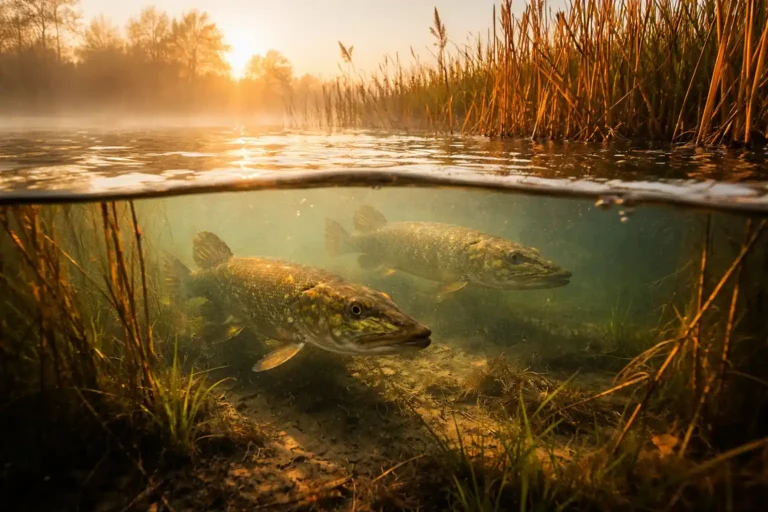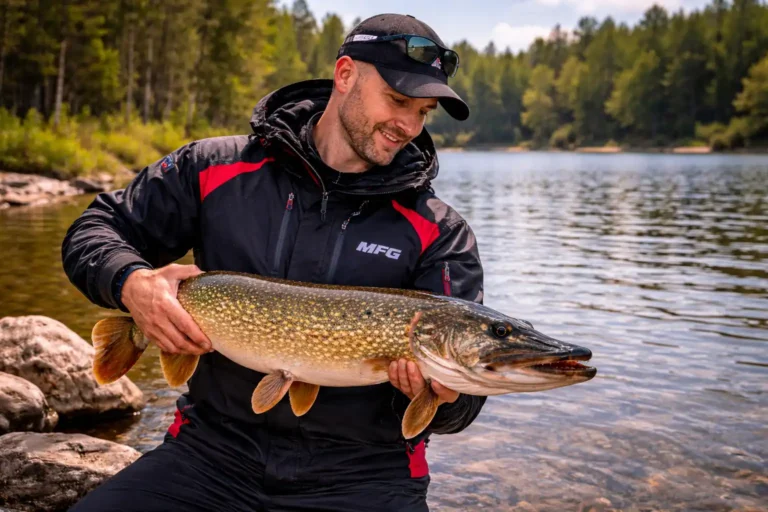


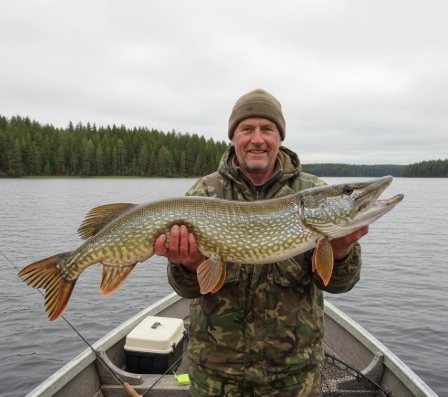
Spring Pike Locations (2026): Where to Find Pre-Spawn Pike, Warm Bays & Migration Routes
Stop fishing empty water. Spring pike locations are the difference between a dead day and a 10-fish session — yet most anglers are still casting in lifeless spots without realizing the fish have already moved.
Every year the same mistake repeats. Ice disappears, the air warms up, and everyone rushes back to old winter holes or random shallow banks. Most days end in frustration — not because the pike aren’t there, but because they’ve repositioned and anglers are fishing yesterday’s water.
After more than 10 years of tracking spring sessions across natural lakes and rivers — logging depths, temperatures, and sonar marks — one thing became obvious: early-season pike are extremely predictable. Follow warmer water and baitfish and you’ll consistently find them. Ignore movement, and you’ll keep guessing. If you need the cold-season baseline first, study our winter pike fishing guide to understand where these fish migrate from.
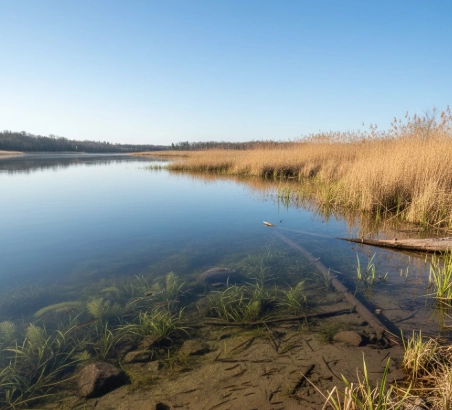
Once temperatures climb into the 4–8°C (39–46°F) range, fish stack on specific migration lanes, warm bays, and staging edges. Miss those zones by even 20–30 meters (65–100 ft) and the lake feels empty. Hit them correctly and suddenly every cast makes sense.
This guide teaches you the exact location system we use every spring to stay around active fish — not random spots, but repeatable positioning logic you can apply on any water.
What you’ll master:
- Where pike go first in spring and the migration routes most anglers completely ignore
- Where fish actually hold in lakes vs rivers (still water vs current positioning)
- How to find active pike faster by focusing only on high-percentage water
- The location mistakes that kill your bite even when fish are nearby
Master these four pieces and you’ll stop guessing and start intercepting fish on purpose.
Let’s start with the first piece most anglers never map out — the actual migration path from winter structure to spring feeding zones.
Where Do Pike Go First in Spring? Migration Routes Most Anglers Ignore
Before you can talk about exact spring spots, you have to understand the movement first — because pike don’t jump shallow overnight. They migrate in stages.
Every season we see anglers make the same wrong assumption. Ice disappears, the first warm days arrive, and everyone rushes straight to the bank. The problem? The fish aren’t there yet. From years of boat logs, sonar tracks, and repeated sessions on the same waters, we’ve learned that early-season pike move slowly and predictably, not randomly.
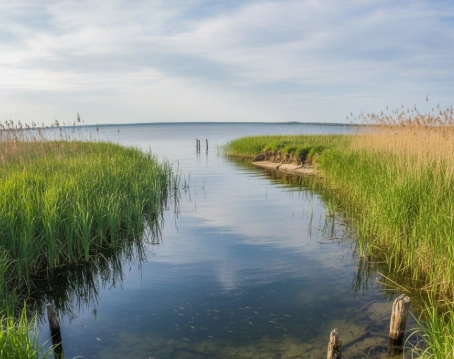
Understanding this movement is the foundation for identifying consistent spring pike locations later in the day. If you don’t know how fish travel, every spot feels random. Once you understand their routes, the lake suddenly starts making sense.
Pike travel like commuters, not sprinters. They follow breaklines, old river channels, depth transitions, and any natural structure that connects deep winter basins with warmer shallow areas. Think of these routes as underwater highways. If you fish away from them, you’re guessing. If you fish on them, you’re intercepting fish that are already moving.
Stage 1 — Leaving Deep Winter Water
Late winter fish still relate to their classic cold-water structure: deeper holes, steep drops, and stable temperatures. As conditions begin to warm, they slide off those basins and start using the first breaks and transition edges instead of sitting glued to the bottom.
On electronics, you’ll often see them slightly higher in the water column or cruising edges rather than stacked tight in one spot. This is the earliest signal that migration has started.
Stage 2 — Staging on Structure Highways
This is where some of the most consistent early-season action actually happens. Pike pause on mid-depth structure that connects deep and shallow zones: channel bends, saddles, tapering points, and long shelves that act like natural corridors.
We consistently find multiple fish grouped here in 2–4 m (6–13 ft) of water once temperatures begin climbing through roughly 4–8°C (39–46°F). These staging lanes very often hold the biggest pre-spawn females in the entire system. While smaller fish roam around, heavy fish conserve energy and sit directly on these transition highways, waiting for the final move shallow.
If fish seem to “vanish” from winter spots but haven’t shown up in the bays yet, this is almost always where they are. Not gone — just parked halfway.
Stage 3 — Sliding into Shallow Feeding Zones
Only after stable warming trends do pike finally commit to shallow water. And even then, they don’t use every bank or flat. They choose specific areas that warm faster and offer easy access back to depth.
This leads to what we call the Golden Rule of Spring Bays: if a shallow area doesn’t have a clean, direct connection to deeper water, it rarely holds consistent fish.
Two bays may look identical from the surface — same reeds, same depth, same sunlight. But the bay connected to a channel or breakline will load up with bait and pike, while the isolated one stays empty. Pike choose the easiest route, not the prettiest water.
Once you start thinking in paths instead of random spots, everything changes. You stop blind casting and begin targeting only the routes fish naturally travel. For the complete step-by-step system that covers locations, tactics, and lure selection, see our spring pike fishing guide.
Next, let’s break down which specific shallow areas warm first and consistently concentrate baitfish — the bays and pockets that produce the highest-percentage spring bites year after year.
Spring Pike in Lakes vs Rivers: Where Fish Actually Hold (Still Water vs Current)
One of the fastest ways to waste a spring day is treating lakes and rivers the same. They might hold the same species, but fish position completely differently depending on whether the water is still or moving.
| Feature | Lake Positioning | River Positioning |
|---|---|---|
| Main Driver | Temperature & baitfish movement | Energy conservation against current |
| Key Spots | Warm bays, flats, shelves, channel edges | Eddies, backwaters, slack pockets, log jams |
| Movement Style | Horizontal roaming along contours | Vertical stacking behind current breaks |
| Search Strategy | Cover water, follow warmth & bait | Slow down, pick apart current shelters |
Over the years we’ve learned this the hard way. Spots that are automatic on natural lakes often feel dead on rivers, and classic river eddies rarely produce on flat water. The reason is simple: current changes how pike conserve energy, feed, and choose holding spots.
If you want to consistently locate spring pike locations, you have to adjust your thinking to the type of system you’re fishing. Structure still matters — but how fish use it changes a lot.
How Pike Position in Lakes (Still Water)
In lakes, movement is controlled mostly by temperature and baitfish. Without current pushing them around, pike can spread out and use wider areas. They roam breaklines, warm bays, shallow flats, and channel edges more freely.
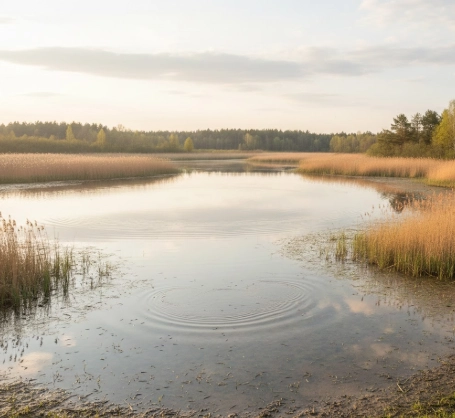
Think horizontal movement. Fish slide along contours and shelves, following warming water and food rather than locking into one tight spot.
That’s why lake fishing often means covering water. Long tapering points, bay entrances, and soft-bottom flats connected to deeper basins consistently reload with fish throughout the day. If bait is present, pike won’t be far away.
How Pike Position in Rivers (Current Water)
Rivers flip the script completely. Current forces fish to be energy-efficient. Instead of roaming open water, they hide in spots where they can rest while food drifts past them.
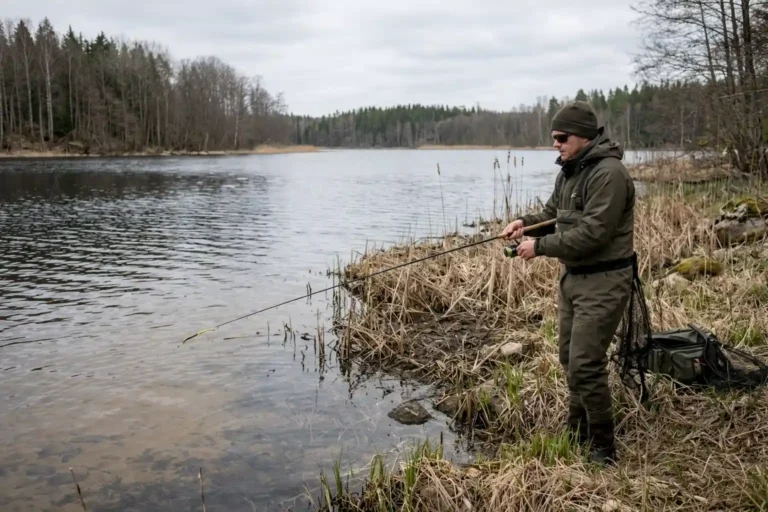
Think vertical positioning and current breaks. Pike stack behind anything that blocks flow: inside bends, fallen trees, reed edges, backwaters, flooded grass, or slow eddies near the bank.
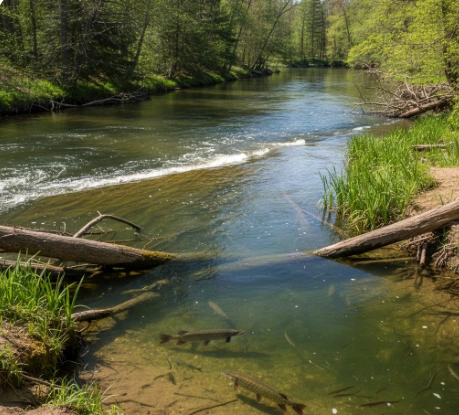
In many rivers, you can fish 300 meters of fast current with nothing happening — then hit one small slack pocket and suddenly find three fish sitting together. Not because it looks good, but because it’s the easiest place for them to ambush prey without fighting the flow.
The Simple Rule That Saves Time
Lakes = follow warmth and bait.
Rivers = follow slack water and current breaks.
Once you apply this rule, everything becomes faster. You stop casting at random shoreline and start targeting only the spots that make biological sense.
Spring success isn’t about fishing more water — it’s about fishing the right type of water for the system you’re on.
Next, let’s put everything together and talk about efficiency — how to stop blind casting completely and focus only on high-percentage areas that consistently produce bites.
How to Find Pike Faster: Stop Blind Casting and Focus Only on High-Percentage Water
Most slow spring days aren’t caused by bad lures — they’re caused by fishing empty water.
We see it every season. Anglers work every meter of shoreline, fan-cast beautiful looking banks, and change baits every ten minutes, hoping something will happen. Hours pass with nothing to show for it. Not because the fish won’t bite — but because there were never any fish there to begin with.
The biggest upgrade you can make in spring isn’t tackle. It’s location discipline. Once you understand how migration routes, warm bays, and current positioning work together, you realize something important: only a small percentage of the lake or river actually holds fish at any given moment.
Those small zones are your real spring pike locations — everything else is just casting practice.
Reaching and covering these high-percentage zones efficiently becomes much easier with the right setup. A well-balanced spinning rod for pike allows longer, more accurate casts, better lure control along structure, and more consistent coverage of productive water.
The 80/20 Reality of Spring Fishing
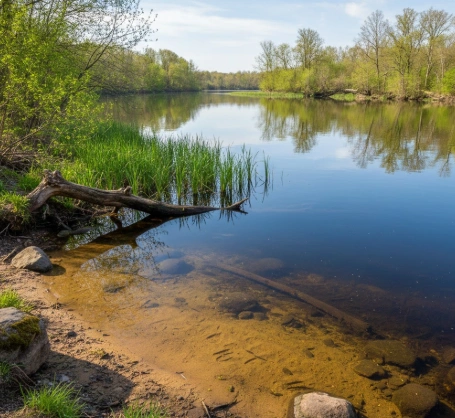
From years of logs and sonar time, the pattern is clear. Roughly 70–80% of the fish are usually concentrated in 20% or less of the available water. That might be one bay corner, one channel edge, or one small slack pocket in a river.
If you’re not around bait, temperature changes, or structure transitions, you’re simply not around fish. It’s that blunt.
Good anglers don’t fish harder. They eliminate dead water faster.
How We Eliminate Water Quickly
Before making serious casts, slow down and read the area first. Electronics, wind direction, sunlight, and bait activity tell you more than random casting ever will.
- No bait on sonar? Move.
- No depth change or structure? Move.
- No follows after 10–15 quality casts? Move.
This simple rule saves hours. Instead of grinding one dead bank for 45 minutes, you check three or four high-percentage areas in the same time and quickly find where life actually is.
Fish Spots, Not Shoreline
One mental shift changes everything: stop thinking in terms of “banks” and start thinking in terms of “spots.” Pike don’t spread evenly. They stack.
Target specific features only — bay entrances, channel bends, reed edges with depth nearby, warm flats connected to migration routes, or slack water behind current breaks. If a place doesn’t have a clear reason to hold fish, skip it.
The faster you reject bad water, the faster you find active fish.
Put all three pieces together — migration paths, warming bays, and system-specific positioning — and spring stops feeling random. You’re no longer searching the lake. You’re simply rotating between proven high-percentage areas until you intercept feeding fish.
Spring Pike Location Mistakes That Kill Your Bite (Even When Fish Are Nearby)
By spring, most slow days aren’t caused by bad lures or bad luck — they’re caused by small positioning mistakes. The fish are there. They’re just not where many anglers expect them to be.
After years of tracking the same lakes and rivers through late winter into pre-spawn, the pattern is obvious. The anglers who struggle usually aren’t doing anything “wrong” mechanically. They’re simply fishing low-percentage water while the real spring pike locations sit somewhere else entirely.
Mistake 1 — Fishing Last Month’s Spots
Winter holes, deep basins, and cold-season structure can be incredibly consistent for months. But once temperatures start rising, those fish begin sliding away from those areas fast.
Staying glued to yesterday’s pattern is the fastest way to fish empty water. Spring is about movement, not history.
Mistake 2 — Treating All Shallows the Same
Many anglers see reeds and shallow flats and assume every bank is equal. It isn’t. Some bays warm faster, hold bait, and connect to migration routes. Others look good but never stabilize or attract life.
Warm, connected water consistently outperforms random shoreline. If there’s no depth access or bait activity, it’s usually not worth your time.
Mistake 3 — Ignoring Transition Structure
The areas between deep and shallow water — channel edges, breaklines, and shelves — often hold more fish than either extreme. Yet many anglers drive right past them chasing obvious banks.
These transition lanes quietly produce some of the most reliable spring pike locations of the entire season. Skipping them means missing fish that are literally halfway through their migration.
Mistake 4 — Fishing Too Slow in Dead Water
Confidence is good. Grinding one spot for 40 minutes “just in case” isn’t. If there’s no bait, no follows, and no structure advantage, you’re just burning time.
Spring rewards mobility. Check quickly, read the signs, and move on if nothing looks alive.
Mistake 5 — Forgetting System Differences
Lake habits don’t always work in rivers, and river habits don’t always work in lakes. Current, slack water, and energy conservation completely change where fish sit.
Always adjust your positioning strategy to the water type first — then pick your casts.
Avoid these simple mistakes and the lake suddenly feels smaller, clearer, and easier to read. Instead of searching everywhere, you start rotating only between proven, high-percentage areas where fish naturally want to be.
Let’s wrap everything up and quickly summarize the exact mindset that consistently puts you around active fish all spring long.
Spring Pike Fishing FAQ: Depth, Temperature, Timing & Locations Explained
This FAQ exists for one reason: to help you quickly lock onto the right spring pike locations without overthinking it. Spring fishing becomes predictable once you focus on migration routes, warm connected water, and system type (lake vs river). These are the exact questions we hear most on the bank — and the answers that consistently match what we see on the water every season.
Where are the best places to find pike in early spring?
The best early-season spring pike locations are warm, shallow bays that connect directly to deeper water. Focus on protected pockets that warm first (soft bottom, slight stain, full sun exposure) and sit close to a channel edge or breakline. If a bay warms but has no depth access, it usually stays inconsistent and empty.
How shallow do pike go during spring?
Once warming trends stabilize, pike can move surprisingly shallow. It’s common to find fish in 1–2 m (3–6 ft), especially when baitfish push into the flats. The key is not “shallow everywhere” — it’s shallow in high-percentage spring pike locations connected to migration routes and quick access back to depth.
What water temperature triggers spring pike movement?
In most systems, noticeable movement begins when water temperatures rise into roughly 4–8°C (39–46°F). At that point, staging lanes, channel edges, and warm bays consistently start producing. Temperature acts like a compass — it’s one of the fastest ways to narrow down spring pike locations that actually hold fish.
Are spring pike locations different in lakes compared to rivers?
Yes — positioning changes dramatically. In lakes, pike follow warming water and bait across flats, shelves, and bay entrances. In rivers, current forces fish into slack water and current breaks such as inside bends, backwaters, and flooded cover. Finding spring pike in rivers is mostly about energy-saving positions rather than open water roaming.
How long should I fish one spot before moving in spring?
Don’t grind dead water. If a spot shows no bait, no structure advantage, and no follows after 10–15 quality casts, move immediately. The fastest way to catch more fish is rotating between proven spring pike locations instead of hoping a random bank suddenly turns on.
How to Consistently Find Spring Pike Locations (Simple System That Works All Season)
Spring pike locations aren’t random. Once you stop fishing “pretty water” and start fishing the system, the whole season becomes predictable.
Here’s the mindset that consistently puts you around active fish:
- Follow the migration routes first — fish move in stages, and transition lanes often hold the biggest pre-spawn females.
- Start in the warmest connected bays — a small temperature advantage can turn dead water into the best spring pike locations overnight.
- Adjust to the system — lakes reward warmth and bait movement, rivers reward slack water and current breaks.
- Be ruthless with location — eliminate dead water fast and rotate only through high-percentage areas.
If you apply those four rules, you’ll spend less time searching and more time fishing where pike actually live in spring. And once you have the locations right, everything else gets easier — lure choice, retrieve speed, and even landing fish in shallow water without spooking the zone.
Now it’s your turn: take this system to your home water, map your spring pike locations, and keep notes. The anglers who track what warms first, where bait appears, and which routes fish use are the ones who improve the fastest.
If you want to share your spring results, photos, or location lessons, post them on our Master Fishing Guide Facebook Page — we’ll feature the best catches and real on-water patterns from the community.