

February Pike Fishing — How to Catch Giants in the Hardest Month of Winter
February pike fishing is the month that exposes who really understands winter pike—and who’s just waiting for spring.
Most anglers treat it as “the end of winter,” assuming the fish are about to wake up and behave normally again. That mistake costs them their biggest opportunities of the season. February pike are still winter fish, but they’re no longer frozen in place. Light changes. Days stretch. Shallow bays warm by a single degree. And that tiny shift is enough to make old giants slide a few meters, test new water, and open short feeding windows that simply don’t exist in January.
As an Amazon Associate, we earn from qualifying purchases — no cost to you. That’s how we keep this site running. Read more ›
We’ve spent countless February days standing in half-melted snow, watching the same spots that were dead two weeks earlier suddenly come alive for twenty minutes—and then shut down again. That’s February in a nutshell: Not easy. Not generous. But brutally honest. It rewards anglers who slow down, read water temperature by feel, and trust subtle movement over calendar dates.
This is the month where one right cast can beat eight empty hours. Where patience matters more than lure choice. And where the biggest pike of winter are caught by anglers who understand that February isn’t “almost spring”—it’s still winter, just with sharper edges.
Where Pike Actually Move in February — Exact Lake and River Zones That Start Producing
February is the first month when winter pike begin to reposition without committing. They are not migrating. They are not roaming. But they are no longer welded to their deepest winter holes either. What we see on the water is a subtle drift—often just a few meters—from pure survival zones toward areas that will matter in early spring.
Exact February Pike Holding Zones
On lakes, pike begin sliding toward:
– the edges of deep basins: where the bottom starts to rise.
– the first breaks: specifically those leading directly into shallow bays.
– narrow corridors: channels that connect winter depth with sun-exposed flats.
On rivers, they shift into:
– soft inside bends: where the current is practically non-existent.
– slack-water pockets: tight spots behind current seams.
– dark-bottom stretches: muddy or silty areas that absorb even the slightest warmth.
These movements don’t happen all day. They appear in brief, fragile windows, most often around midday, when the sun has had time to touch the water.
What makes February dangerous for anglers is that pike behavior still follows full winter logic. They don’t chase. They don’t roam. They test. They pause. They slide out, inspect, and slide back. That’s why so many anglers “feel” fish without ever hooking them. Understanding this transition only makes sense if you already grasp the core patterns explained in winter pike behavior—because February doesn’t replace those rules. It stretches them.
The biggest mistake is assuming movement equals activity. In February, movement only means possibility. You still have to meet the fish in the exact layer of water where they pause. Miss that layer, and the day feels empty. Find it, and one single bite can define your entire season.
February Pike Depth — The Exact Water Layers Where Bites Actually Happen
In February, depth stops being a number and becomes a living zone. Pike are no longer glued to the deepest winter holes, but they are not cruising the shallows either. What works now is a narrow vertical band—often just a few feet—that shifts with light, wind, and surface temperature.
On most waters, we consistently find February pike holding one layer above their deepest winter position. Not on top of structure. Not suspended high. But hovering just off the break, close enough to retreat in seconds, yet shallow enough to feel the day warming.
This is why so many February days feel “empty.” Anglers fish too deep because it’s winter. Or too shallow because the ice is gone. Both miss the fish. February pike live in the in-between.
What that layer looks like in practice:
– On deep lakes, it’s often 1–3 meters (3–10 ft) above the basin floor.
– On medium waters, it’s the upper edge of the main winter break.
– On rivers, it’s the slow-water shelf just off the bottom, not the bottom itself.
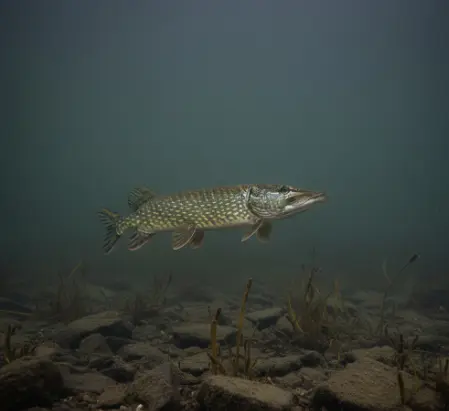
The moment your lure passes through that band, everything changes. Pike don’t chase far in February—but they will move a short distance vertically. That small rise is the strike.
This depth logic becomes crystal clear once you understand the mechanics explained in winter pike depths. February doesn’t break those rules—it tightens them. The feeding zone gets thinner. The margin for error shrinks.
Fish below it and you’re invisible. Fish above it and you’re ignored. But meet pike in that exact layer, and February suddenly feels generous.
February Pike Feeding Windows — Exact Strike Moments in Cold Winter Water
February is not a “bite-all-day” month. It is a month of short, fragile feeding windows that open and close without warning. Pike don’t gradually become active. They switch on for minutes—sometimes half an hour—and then disappear again.
In real winter conditions, those windows most often appear between 10:30 AM and 2:30 PM. Not because pike prefer midday, but because that’s when cold water finally starts to move. The sun has had time to touch shallow zones. Dark bottoms warm first. A single degree shift is enough to trigger movement.
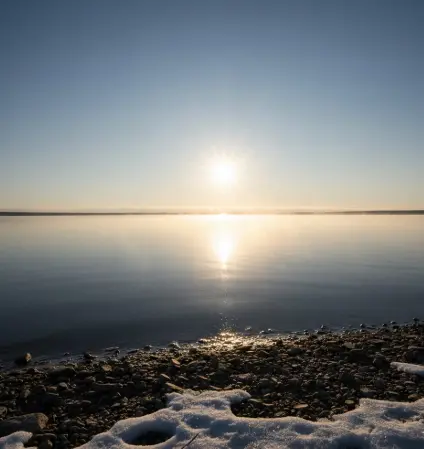
Early mornings in February are usually dead. The water is at its coldest. Pike stay pinned to survival depth. Late afternoons can work—but only if the day was calm and sunny. On cloudy or windy days, the entire window may collapse into a single 20–30 minute burst somewhere around noon.
That’s why February fishing feels unpredictable. You can stand on the same bank for three hours with nothing—and then hook two fish in ten minutes. Those strike windows are not random. They follow the same thermal logic explained in water temperature vs pike activity. In February, that relationship becomes brutal: no temperature shift, no window.
The anglers who succeed in February are not the ones who “try everything.” They are the ones who arrive late, stay ready, and refuse to leave early. Because when that narrow window opens, you either meet it prepared—or you miss the day entirely.
February Pike Tactics — How to Fish When Every Cast Matters
February is the month that punishes impatience. You are no longer “searching” for fish—you are waiting for them to become vulnerable. Covering water fast is the fastest way to miss the only window of the day.
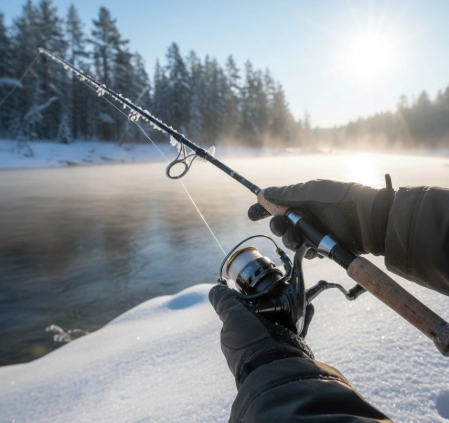
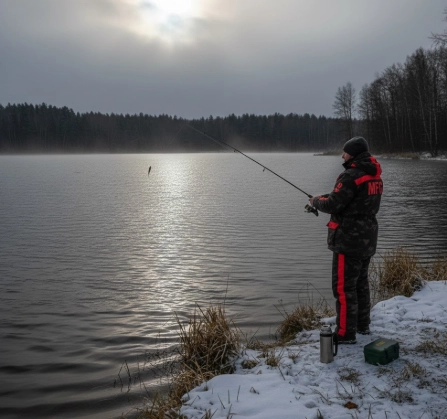
From the bank, your goal is simple: pick one high-probability zone and work it with discipline. Make a cast, let the lure sink fully, then retrieve at a pace that feels almost wrong. Count five… ten… sometimes fifteen seconds between movements. In February, a lure that pauses is more dangerous than one that moves. Pike often strike during the stop, not the motion.
Don’t walk every three casts. February fish don’t roam. They slide in and out of tiny lanes. Stay in place. Re-cast the same line. Change angle before changing spot. Many of our best February fish came on the eighth or ninth pass through the same corridor.
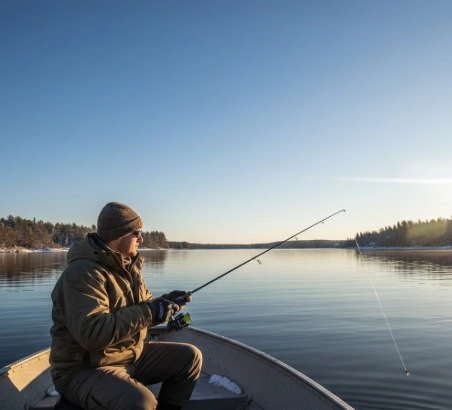
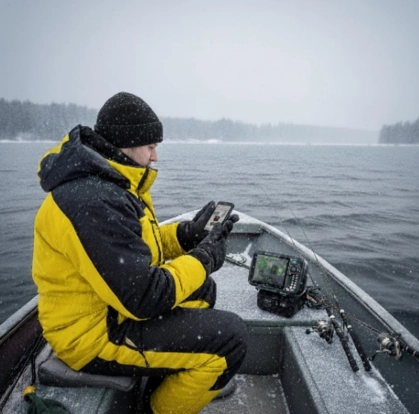
From a boat, the rule is identical—just more precise. Hold position slightly deeper than the break and cast uphill. Let the lure sink back toward you. Work it along the contour, not across open water. Keep the boat still. Noise, drifting, constant repositioning kills February bites. Pike are close, but cautious.
Every February retrieve should follow the same rhythm: slow move → full stop → slow move → full stop. If it feels boring, you’re doing it right. This is not reaction fishing. It’s interception fishing.
These tactics are built on the same winter principles outlined in winter pike fishing, but February tightens the margin. The window is shorter. The fish are fewer. Every cast must count.
In this month, success isn’t about finding more water. It’s about staying in the right water long enough for February to finally give you its one honest chance.
February Pike Lures — Choosing the Right Type for Cold-Water Windows
In February, lure choice is about matching winter behavior, not chasing trends. Pike are still thinking like winter fish: they conserve energy, they hold tight, and they react only when something passes through their narrow comfort zone. That’s why late-winter success depends on a small group of lure types that can stay in the strike zone without forcing the fish to move far.
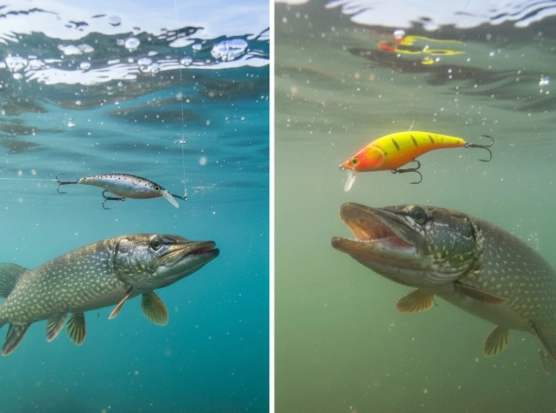
Spoons dominate when pike hold deeper or hover just off winter breaks. Their weight allows full depth control, while their natural flutter keeps working even at near-dead speeds. In February, spoons are not “search tools” — they are interception tools for fish that refuse to chase.
Suspending jerkbaits define late winter. They don’t rise, they don’t sink fast, and they don’t escape the zone. They simply exist where pike are thinking. February fish often strike not during movement, but during stillness — which is exactly what suspending profiles provide.
Soft swimbaits take over when pike hug the bottom. Their neutral movement and slow sink allow them to stay in contact with the fish’s layer without triggering flight. They don’t provoke. They invite.
These are the exact lures we’ve relied on in real February conditions. They are the ones that produced our only bites on long blank days, the ones that turned dead water into action, and the models that consistently outperformed everything else when the window finally opened.
Acme Kastmaster 2 oz (Chrome/Neon Blue)
Check it on Amazon
Dardevle Red & White 1 oz
Check it on Amazon
Rapala Husky Jerk 14
Check it on Amazon
Rapala X-Rap (Suspending)
Check it on Amazon
Z-MAN DieZel MinnowZ 5”
Check it on Amazon
Strike King KVD Jerkbait
Check it on Amazon
February doesn’t reward having “more.” It rewards having the right categories ready when the window opens.
February Pike Conditions — When to Go and When to Stay Home
February is ruthless about conditions. You can do everything right and still blank—because on the wrong day, winter pike simply won’t open. This month is not about effort. It’s about timing the right day.
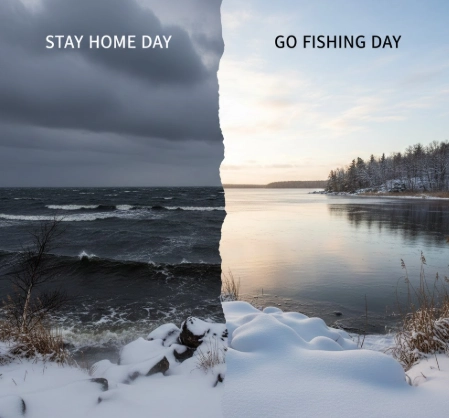
The best February sessions happen under three simple traits: stable weather, calm or light wind, and some form of sunlight. It doesn’t have to be warm. It doesn’t have to be blue-sky perfect. But the day must be steady. Pike in late winter react badly to sudden change.
When to Go (The Green Light):
- Stable high-pressure: Ideally after two or three identical days.
- Filtered sunlight: Light cloud that still allows thermal energy to hit the water.
- Clear, cold light: Even if the air is freezing, clear light triggers movement.
- Minimal wind: Especially on shallow zones where you need the water to stay settled.
When to Stay Home (The Red Light):
- Pressure crashes: Any rapid rise or fall in the last 24 hours.
- Strong, biting winds: These push cold surface water down and kill the “windows.”
- Dark, heavy overcast: Days with zero thermal movement or light penetration.
- Passing fronts: If a front moved through within 24 hours, stay home.
Many February blanks make sense once you understand the pressure mechanics explained in barometric pressure for winter pike. In this month, stability matters more than “good” numbers. Pike don’t need perfect conditions. They need unchanging ones.
We skip more February days than we fish. Not because we’re lazy—but because winter teaches restraint. A bad day doesn’t slowly improve. It stays dead. The right day, however, can turn a frozen lake into a place where one single window gives you everything.
February isn’t about grinding. It’s about choosing wisely. Some days are meant to be spent at home, sharpening hooks and waiting. The fish will tell you when it’s time.
A Real February Pike Day — A Simple Plan That Fits Real Conditions
February sessions go bad when you fish on hope. They go good when you fish on a plan. Below is the exact structure we follow on late-winter days, because it keeps you patient, efficient, and ready for the only window that may show up.
February Pike Day Plan
This plan keeps you from wasting February energy. You don’t need to “try harder” in late winter—you need to stay in the right water long enough, then fish the window with control when it finally opens.
February Pike Fishing FAQ
Is February a good month for pike fishing?
Yes—if you accept how February works. It’s rarely consistent, but it can produce some of the biggest pike of the entire winter because short windows make fish “available” for brief moments.
What time of day is best for pike in February?
Most February bites happen from 10:30 AM to 2:30 PM. That’s when small temperature shifts are most likely to happen and trigger a short feeding window.
Are pike still deep in February?
They’re usually still in winter depth logic, but not always on the deepest bottom. Many fish hold just off the break or one “layer” above their deepest winter position.
Do pike feed before spawning in February?
February is not a nonstop pre-spawn buffet. Pike can feed before spawning, but it shows up as short, specific strike windows, not all-day activity.
What lures work best for February pike?
In most waters, the most reliable categories are spoons, suspending jerkbaits, and slow soft swimbaits—because they stay in the strike zone without forcing fish to chase.
Should I move spots a lot in February?
Usually no. February rewards anglers who pick a strong zone and work it patiently. Spot-hopping often misses the only feeding window of the day.
What weather is best for February pike fishing?
The best days are typically stable days with light wind and some sun (even filtered). Sudden change—especially fast pressure swings—often shuts the bite down.
What’s the biggest February mistake anglers make?
Fishing on a human schedule instead of winter logic. February isn’t about “morning vs evening”—it’s about timing the window and staying ready when nothing seems to be happening.
Final Rule of February Pike Fishing — One Window, One Chance
February is not generous. It doesn’t give you constant action, easy patterns, or fast feedback. What it gives you is access to the biggest fish of winter—if you are willing to think like winter instead of like a human. Understanding how cold water behaves in this period, including even tiny temperature shifts, is critical, which is why real-time data like USGS water temperature readings can be more valuable than any forecast.
Most anglers lose February before the fish ever do—by rushing, moving too much, or expecting the day to “turn on” for them.
One rule to remember: In February, don’t try to make something happen—stay ready for when it does.