

6 Best Tested Winter Fishing Boots (2026–27) — Built for Ice, Snow and Slush
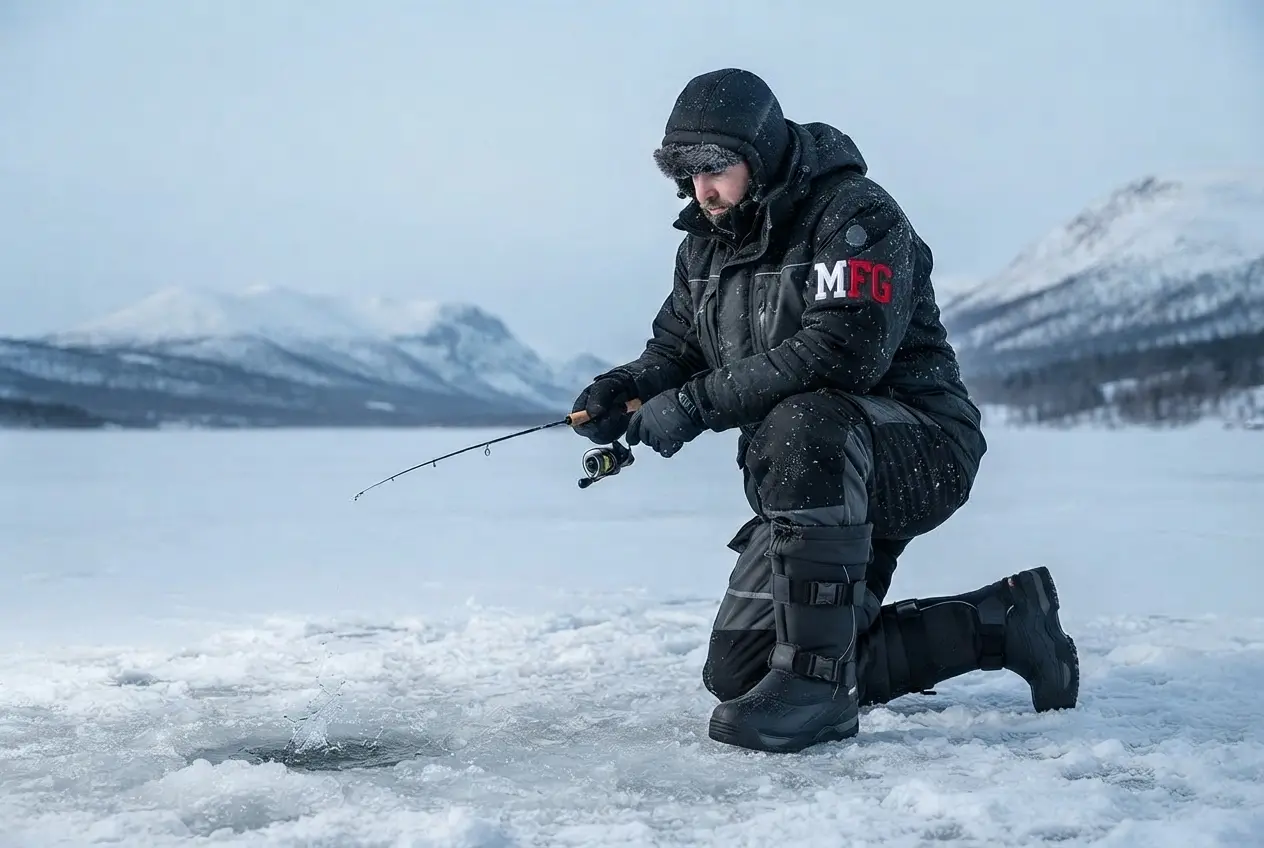
We’ve tested a lot of fishing boots in real winter conditions — snow, slush, frozen shorelines and long, cold days on the water. One thing became painfully clear: when your feet freeze, the fishing day is over. You stop thinking about pike, lures, or spots — you only think about the burning, numb feeling in your toes. That’s exactly why the right fishing boots are not a luxury item, but essential winter gear.
Many of our coldest tests were during winter pike fishing, where long sessions, wind and sub-zero temperatures punish bad footwear immediately. Good fishing boots must do three things at the same time: they have to keep your feet warm, they must stay completely dry, and they need to provide serious grip on ice and wet rocks. Cheap rubber boots usually fail here — they slip, they leak, or they have zero insulation.
As an Amazon Associate, we earn from qualifying purchases — no cost to you. That’s how we keep this site running. Read more ›
During our testing we also learned how important boot height really is. Winter fishing usually means slush, flooded banks, wet grass and snow above the ankles. Taller fishing boots stop that icy water from spilling inside when you step just a bit deeper than planned. And once cold water gets inside your boot, the session is finished — there is no recovery from that in winter.
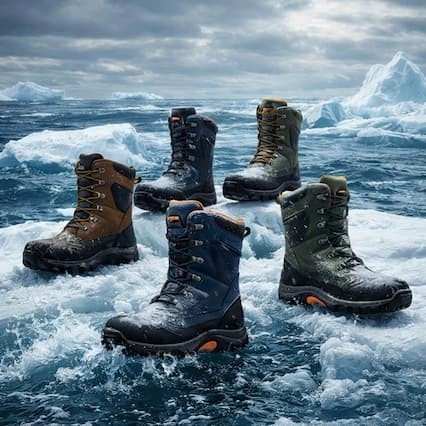
In this guide our editorial team selected fishing boots that actually work for anglers. These are models you can stand in all day, walk long distances to hidden spots, and fight fish in sub-zero conditions. You’ll see budget options that simply do the job, mid-range boots with better comfort, and premium tanks built for brutal cold. Choose honestly based on how and where you fish — your feet will thank you.
Bottom line: if you want longer sessions, better focus and no frostbite risk, invest in proper winter fishing boots. After testing them in freezing weather, we can say with confidence — they make the difference between going home early and fishing all day.
MFG Quick List — Best Winter Fishing Boots
If you are in a hurry, here is our top-tested selection of warm, waterproof fishing boots for winter:
- HISEA Waterproof Insulated Neoprene Fishing Boots — best budget fishing boots for cold, wet riverbanks
- TIDEWE Rubber Neoprene Fishing Boots — affordable insulated boots with strong anti-slip outsole
- Columbia Bugaboot III — best mid-range winter fishing boots with ankle support
- Kamik Nation Plus — warm snow-style fishing boots with removable liner
- Muck Boot Arctic Pro — premium neoprene fishing boots for deep-freeze conditions
- Baffin Impact — extreme-cold boots for ice fishing and sub-zero temperatures
Winter Fishing Boots Compared: Which One Fits How You Fish
| Boot | Best For | Boot Type | Main Strength | Not Ideal For |
|---|---|---|---|---|
| HISEA Neoprene | Wet Banks on a Budget | 5mm neoprene, rubber shell | Fully waterproof in slush, mud and shallow water | Long stationary sits in deep cold |
| TIDEWE Rubber Neoprene | Walking the Bank All Day | Neoprene, sealed rubber shell | Tough, seamless shell with strong grip on snow and wet clay | Temperatures well below about −10°C (14°F) without thermal socks |
| Columbia Bugaboot III | Snow and Cold Bank Sessions | Insulated winter boot | Warmth and ankle support without heavy bulk | Standing in water or deep slush |
| Kamik Nation Plus | Long, Static Waits in Snow | Insulated boot, removable liner | Liner dries overnight for a warm start the next day | Long hikes and standing water |
| Muck Boot Arctic Pro | Deep Cold with Slush or Overflow | Heavy neoprene, full rubber shell | Warmth plus full waterproofing for slush and overflow | Anglers who want a light boot |
| Baffin Impact | Hours Standing on the Ice | Expedition boot, multi-layer liner | Maximum warmth when you barely move | Mild days or active walking — more boot than you need |
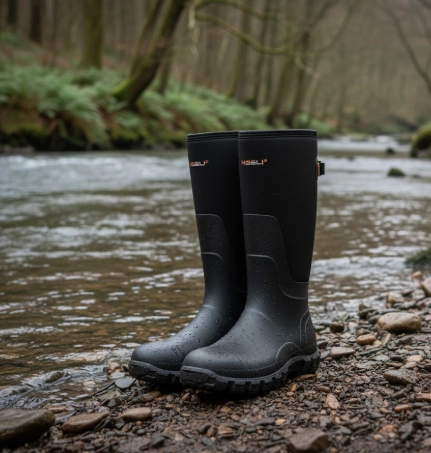
HISEA Waterproof Neoprene Fishing Boots — Best Budget Winter Pick
If you’ve ever cut a fishing trip short because your toes felt like they were about to snap off, you already know that “cheap boots” usually equal disaster. However, after putting the HISEA waterproof neoprene fishing boots through a brutal weekend of slush, frozen mud, and shallow river crossings, we can honestly say this: you don’t always need to drop $300 to stay dry.
These are not backyard rain boots. We tested them specifically in real winter pike conditions — ankle-deep muck, slippery rocks, and that annoying 2°C (35°F) rain that soaks everything. They stayed waterproof, flexible, and warm enough to actually enjoy fishing instead of counting minutes until you get back to the car heater.
What actually matters when you’re on the bank
✔ 5mm Neoprene Shield: Most budget boots use 3mm neoprene — fine for spring, useless in January. The 5mm insulation in the HISEA model kept our feet warm even while standing still for nearly two hours waiting for a bite.
✔ “Pike-Proof” Grip: Winter riverbanks are slip hazards. The reinforced anti-slip outsole has deep lugs that bite into frozen mud and wet grass, giving you the stability you need when leaning over a steep bank to land a heavy fish.
✔ Flexibility vs Protection: Many winter boots feel like concrete blocks. These don’t. Around the ankle they flex enough that you can walk long distances searching for active fish without feeling like you’re wearing ski boots.
Combine solid winter fishing boots with reliable winter pike reels and a warm layered jacket system, and you’ve got a setup built for real sub-zero fishing days.
Pro tips from the field
• The Sock Rule: Insulation is solid, but when temperatures drop below freezing, pair them with quality merino wool socks — game changer.
• Sizing Secret: They fit true to size, but for winter fishing order one size up. You need that extra air pocket and space for thick socks. Tight boots = cold feet, no matter the insulation.
• Maintenance: Rinse mud off the same day. Letting mud dry pulls moisture out of rubber over time and leads to micro-cracks.
The verdict
Are they as warm as premium expedition boots like the Baffin Impact? No. But for most anglers hitting lakes and rivers several times per week, HISEA offers the best warmth-per-dollar ratio on the market. They’re rugged, fully waterproof, comfortable to walk in, and built for the grit of real-world fishing — not for looking pretty in catalog photos.
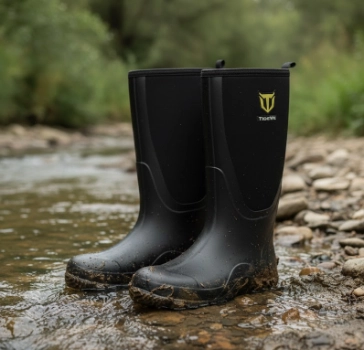
TIDEWE Rubber Neoprene Fishing Boots — Best Value Winter Workhorse
If you’ve ever had boots that cracked in the cold or started leaking right when you stepped into shallow water, you’ll immediately appreciate the TIDEWE Rubber Neoprene Fishing Boots. These things are built like tanks. We dragged them through frozen cattails, over icy rocks and into knee-deep slush, and they never folded or softened up like cheap rubber tends to do.
The first thing you notice is how sealed they are. No seams that scream “future leak point.” Just one solid waterproof shell with neoprene insulation that actually traps heat instead of just advertising it. When you combine dependable winter boots like these with strong winter pike rods, you stop worrying about gear and actually focus on locating fish.
Where TIDEWE boots really shine
✔ Serious waterproofing: We stood in icy shoreline water for multiple minutes at a time — zero leaks, zero seepage, zero wet toes.
✔ Strong anti-slip outsole: The aggressive tread pattern bites into snow, ice crust and wet clay banks. You can climb, lean forward and land fish without feeling like you’re about to go skating.
✔ Warmth without overheating: Insulation is legit for winter, but breathable enough that your feet don’t stew during long walks to reach remote spots.
Real-world tips before buying
• Temperature reality: Perfect for conditions from about −10°C to +5°C (14–41°F). Below that, add thermal socks and you’re still good.
• Fit notes: TIDEWE felt roomier than HISEA in our testing. Check the size guide for the exact model and try the boots with your winter socks; do not automatically order a size larger. Your toes should have room to move without your heel slipping when you walk.
• Best users: Shore anglers, river walkers, and guys who fish all day instead of sitting in one place. These are made for movement.
The verdict
If you want boots that feel tougher than their price tag, TIDEWE is the sweet spot. Not as extreme as ultra-premium expedition boots, but far stronger than typical “budget rubber” categories. They’re warm, durable, completely waterproof and comfortable enough for full-day winter sessions — exactly what most serious anglers actually need.
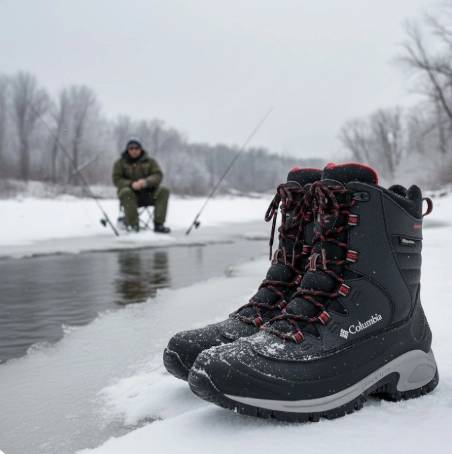
Columbia Bugaboot III — Best Mid-Range Winter Fishing Boots (Warmth Without Bulk)
If your winter sessions usually mean snow up to your ankles and standing still for long periods, the Columbia Bugaboot III are exactly the type of boot that saves the day. They’re not rubber-neoprene like HISEA or TIDEWE — this is a true insulated winter boot built for cold, wind and long bank sessions where movement is minimal.
We used them during classic January pike fishing conditions — minus temperatures, crunchy snow, frozen guides and long waiting periods between bites. This is where Bugaboot III proves why it’s one of the most popular winter boots in North America: your toes simply don’t quit.
What makes Bugaboot III different
✔ Real cold-weather insulation: Rated down to −32°C (−25°F). Even if those numbers are optimistic, real-world warmth is far above average for this price class.
✔ Lightweight for such warmth: Most ultra-warm boots feel like bricks. Columbia somehow keeps these surprisingly light, which matters when you walk kilometers along the bank.
✔ Supportive ankle structure: When you are climbing snowy slopes or stepping across icy rocks, that stiff ankle support is the difference between “safe” and “twisted.”
Field notes before you buy
• Not for deep water standing: These are winter boots first, not full rubber waders. Perfect for snow and shoreline slush, not for standing calf-deep in water.
• Fit tips: True to size. Only go half-size up if you use extremely thick socks.
• Best use case: Static fishing, deadbaiting, bank sitting, and long cold days with little walking but lots of freezing air.
The verdict
If neoprene boots feel too “wet-weather” and you want something built like a true winter boot, Columbia Bugaboot III nails that gap. They’re warm, supportive, snow-proof, and built for real sub-zero pike fishing days when most people stay at home. For anglers who hate numb toes more than anything, this is the smartest mid-range choice you can buy.
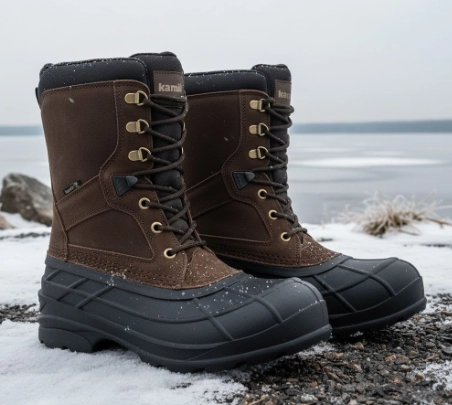
Kamik Nation Plus — Classic Winter Fishing Boot for Sub-Zero Temperatures
If your winters are more about minus temperatures than rain and mud, the Kamik Nation Plus are exactly the kind of boot that keeps you on the bank when everyone else goes home. These are traditional cold-weather boots with a removable insulated liner — made for real frost, not mild autumn drizzle.
They shine in situations where you aren’t constantly walking but spend long sessions waiting for a rod to fold over. Think static setups, alarms, and deadbaits. That’s why they pair perfectly with serious winter pike deadbaits — long, cold sessions where warmth matters more than anything else.
Where Kamik Nation Plus truly excels
Removable inner liner: This is a huge practical advantage. You can pull the liner out at home, dry it overnight, and start the next day with completely warm, moisture-free boots.
Real sub-zero insulation: Designed for deep winter — ice edges, frozen shoreline grass, and hours of waiting without moving much.
Tall, snow-ready profile: High cuff blocks blowing snow and drifting powder, so you aren’t constantly dumping snow out of your boots.
Important field notes
Not designed for standing in water: They are winter boots first, not rubber waders. Perfect for snow and slush, not calf-deep river standing.
Bulk factor: They are bigger and heavier than neoprene boots. If you hike long distances, you’ll notice the weight — that’s the price of serious insulation.
Static fishing specialists: Best for anglers who set rods, wait for runs and don’t walk 10 km along the bank.
The verdict
Kamik Nation Plus is for anglers who fish when it’s genuinely cold, not just chilly. If your sessions involve snowstorms, −10°C (14°F) wind, frozen rod guides and long periods of no movement, this boot makes the difference between going home early and staying until the big fish finally commits. Warm, durable and proven over decades — a true winter classic.
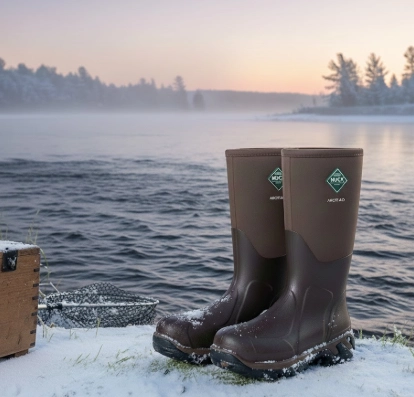
Muck Boot Arctic Pro — Best Extreme-Cold Fishing Boots
If your winter fishing means bitter wind, knee-deep snow and ice building up on rod guides, the Muck Boot Arctic Pro are the boots built exactly for that. These are not “cold-weather lookalikes” — this model is designed for hunters and anglers who actually stay outside when temperatures drop far below freezing.
What impressed us most is how warm they stay even when you’re not moving much. When you combine Arctic Pro boots with proper layering and the best winter fishing gloves, you can comfortably fish through long, icy sessions that usually send people home early.
Why Arctic Pro stands above regular neoprene boots
Extreme insulation: Heavy-duty neoprene and thick lining trap heat incredibly well, even during static deadbait sessions.
Full rubber waterproof shell: You can step into slush, overflow and shoreline water without worrying about leaks.
Serious traction: The outsole is built for snow and wet ice crust, giving you stability when climbing steep, frozen banks.
Who these boots are really for
Hard-winter anglers: People who fish in −15°C (5°F) type weather, not just chilly autumn conditions.
Static fishing and long waits: Perfect for ice-edge pike fishing, bait alarms and all-day sessions in deep cold.
Minimal compromise crowd: If you’d rather carry a heavier boot than deal with numb toes, this is your category.
The verdict
Muck Boot Arctic Pro is the boot you buy when winter isn’t a season — it’s your normal fishing reality. If you’re tired of “warm on paper, cold in real life” footwear, this model delivers the insulation, waterproofing and traction that brutal winter pike fishing actually demands.
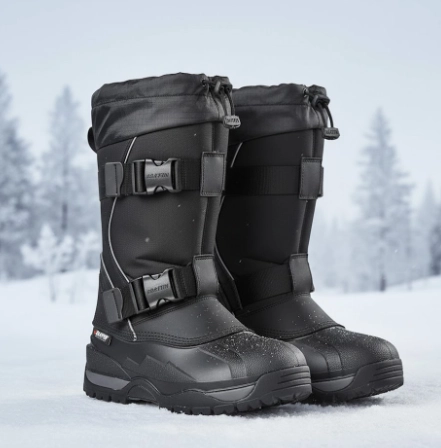
Baffin Impact — Ultimate Extreme-Cold Fishing Boots (Built for Brutal Winters)
If you regularly fish in weather that makes car doors freeze shut, the Baffin Impact are the boots built for you. These are expedition-grade winter boots — the kind you buy once and use for years when temperatures are way below what normal neoprene boots can handle.
The first impression is simple: ridiculous warmth. Even when you’re standing still for long periods, waiting for that one winter take, your toes stay alive. That’s the whole point of Impact — they are made for anglers who don’t pack up when the thermometer sinks deep into the negatives.
While these boots keep your circulation going in deep freeze, you still need to trigger strikes from sluggish winter predators. Pairing this level of warmth with the best 6 pike lures for winter gives you the best chance to land a trophy when others are too cold to even cast.
Why Baffin Impact is in a league of its own
Serious expedition insulation: Multi-layer inner boot system designed for extreme sub-zero temperatures.
Massive snow protection: High cut, cinch-top collar and dense outer shell keep drifting powder and wind chill out.
Built for zero movement fishing: Perfect for deadbaiting, static rigs and long hours of waiting in brutal cold.
Who should actually buy these boots
Anglers in real Arctic-like winters: Environments where −20°C (−4°F) is not “rare,” it’s normal.
Ice-edge and bank sitters: Those doing minimal walking but maximum freezing.
“Done with cold feet forever” crowd: If you’ve tried everything else and still freeze, Impact is the endgame option.
The verdict
Baffin Impact are not for everyone — they’re for anglers who refuse to quit because of weather. If your fishing reality includes frozen braids, iced rod guides and breath turning into crystals, these boots give you something priceless in winter: you forget about your feet and focus purely on fishing.
Buyer’s Guide — How to Choose the Best Winter Fishing Boots
Winter fishing boots are not just “shoes” — they decide whether you fish for six hours or quit after forty minutes. After years of freezing banks and long sessions in sleet and wet snow, here is exactly what matters and what doesn’t when choosing the right pair.
Neoprene vs. Gore-Tex — what’s actually better?
Neoprene boots trap heat. They work like a wetsuit: your body warms the thin layer of air and moisture inside the boot. They are perfect for anglers who mostly stand still, set deadbaits, or slowly work jerkbaits. The downside: they do not breathe well, so feet may sweat when hiking long distances.
Gore-Tex and synthetic insulated boots breathe better. They are the better choice if you walk a lot, change spots frequently, or fish rivers where you’re constantly on the move. They don’t feel like “rubber tubes” and reduce moisture buildup inside the boot — which is one of the main causes of cold feet.
Insulation ratings — what does 200g vs 400g really mean?
Most anglers misunderstand insulation ratings. 200g insulation is fine for active fishing and constant walking. 400g–800g insulation is designed for static anglers who stand in one place for hours in sub-zero temperatures. If you are mostly stationary while winter pike fishing, go higher on insulation — movement will not be there to keep blood flow going.
Socks matter as much as the boots
Even the best boot fails if you use the wrong socks. Cotton is the enemy — it absorbs moisture and holds it against your skin. That moisture then cools down, and your feet freeze. The winning combo is:
- a thin moisture-wicking liner sock
- a thick merino wool outer sock
This keeps sweat away from the skin and traps warm air around your toes, which is exactly what you need when standing still near icy water.
Choosing Boots for Ice Fishing: Three Questions to Answer First
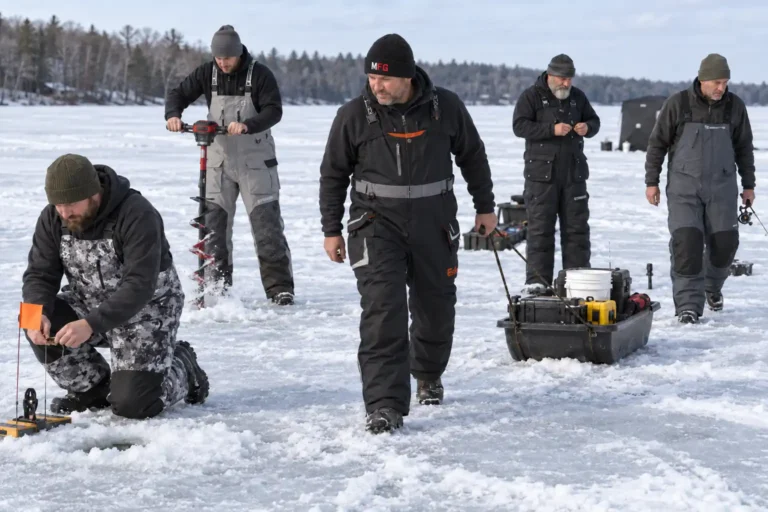
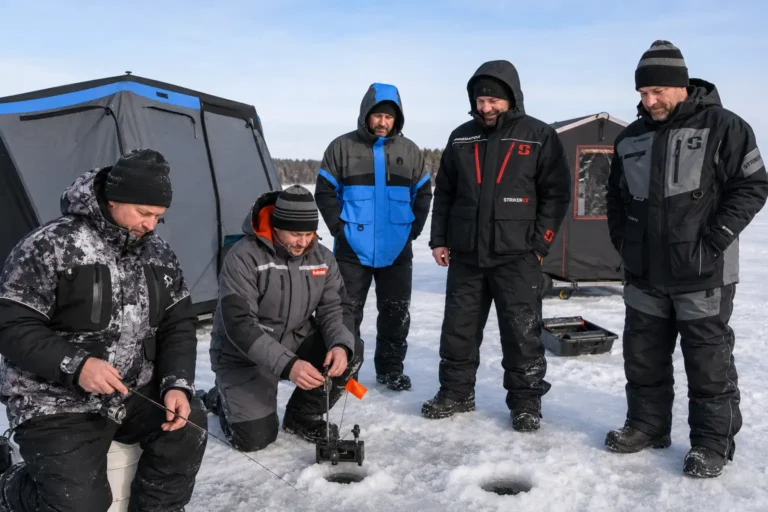
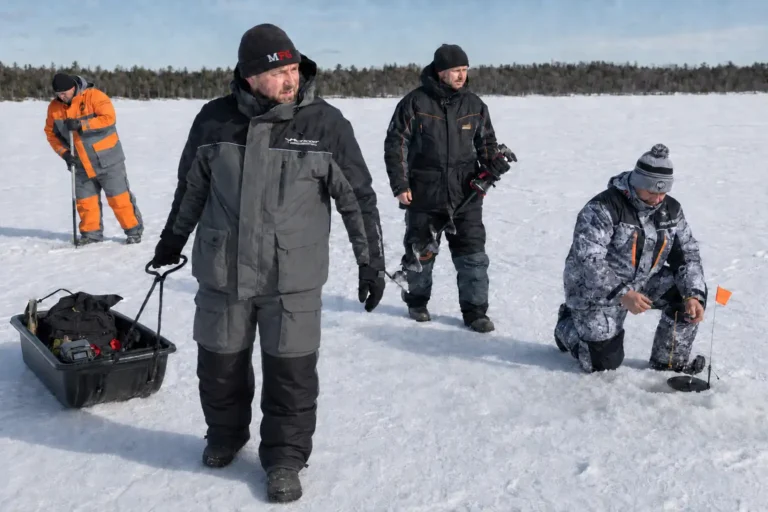
Standing on ice is a different job than walking a frozen bank. Your feet sit on a frozen surface for hours, the conditions underfoot can change from dry snow to slush in one afternoon, and the ice itself can be slick enough to put you on the ground. Answer these three questions before choosing a pair.
1. How long will you stand in one place? The ice pulls heat from your feet the entire time you are standing on it. If you spend most of the day watching tip-ups or jigging from one hole, prioritize maximum insulation and a thick liner over light weight — that is where the Baffin Impact, Muck Boot Arctic Pro, and Kamik Nation Plus make the most sense. If you drill and move often, a lighter boot that doesn’t overheat on the walk is usually the better trade.
2. Will there be slush or water on top of the ice? Early and late ice, heavy snow cover, and thaw days can leave standing slush or overflow on the surface. In those conditions, waterproof coverage and enough boot height matter alongside insulation, because a boot that lets water in will be cold no matter how warm it is rated. The Muck Arctic Pro, HISEA, and TIDEWE are better suited to wet slush and shallow water below the boot opening, while the Bugaboot III and Kamik Nation Plus are built for snow rather than standing water.
3. How will you deal with slippery ice? A warm boot does not solve traction on smooth, clear ice. Most winter boot outsoles are designed for snow, mud, and wet rocks, not glare ice. If you fish lakes that blow clear of snow, plan on wearing a pair of traction cleats over your boots and check that they fit the outside dimensions of the boot you choose. We compare the options in our ice fishing cleats guide.
Choose the boots for the way you fish, then plan the rest of the trip. If you fish on a frozen lake, our ice fishing for pike guide covers where to drill and how to fish once you get there. If you fish open water from a winter bank or boat, our guide to winter pike depths and locations helps you choose where to start.
FAQ — Winter Fishing Boots
1. Should I buy winter boots one size larger?
It depends on the model. Some boots run snug enough that going up a size leaves room for thick socks, while others are already roomy and fit well in your normal size. Check the fit notes for each boot above. With your winter socks on, you should be able to wiggle your toes freely without your heel sliding up and down when you walk.
2. Can I use these boots for ice fishing too?
Some of them. For long hours standing on the ice, the heavily insulated Baffin Impact, Muck Boot Arctic Pro, and Kamik Nation Plus are the strongest choices. When slush or overflow sits on top of the ice, the Muck Arctic Pro is better suited to wet conditions because of its waterproof rubber coverage. HISEA and TIDEWE suit shorter, more active trips. No boot on this list replaces traction cleats on smooth, clear ice — warmth and grip are separate considerations.
3. How do I stop my feet from sweating (and then freezing)?
Avoid cotton socks, which retain moisture. Try a thin moisture-wicking liner sock under a merino wool sock, leaving enough room inside the boot for your toes to move. If your feet sweat during the walk out, damp socks can make them feel colder when you stop moving.
4. What is the fastest way to dry winter boots overnight?
Remove the liners if the boots have them, as with Kamik Nation Plus. Follow the manufacturer’s care instructions and avoid placing boots directly against high heat, which can damage materials or adhesives. A suitable boot dryer or absorbent paper replaced as it becomes damp can help dry the inside.
5. Why do anglers choose merino wool socks?
Merino wool can help manage moisture and retain warmth when damp. The sock still needs to fit comfortably inside the boot: adding a thick pair that squeezes your toes can make your feet feel colder.
6. Are −40°C / −40°F temperature ratings realistic?
Treat a temperature rating as a rough guide, not a promise that your feet will stay warm at that temperature. Ratings vary between brands and may not reflect hours of standing still while fishing. Fit, socks, moisture and how much you move also affect how warm a boot feels.
Final Thoughts on Winter Fishing Boots
Cold-weather fishing is never about “being tough” — it is about using the right gear. The difference between an hour of suffering and a full productive day on the water usually starts with your feet. Choose insulated boots, leave a little extra space for socks, and control moisture first, not just temperature.
Take simple care of your boots and they will last for years. To prevent cracking and keep the rubber flexible, follow the official care instructions from the manufacturer.
If your feet are warm, you think clearer, move better, and fish longer. And in winter, extra time on the water is usually the difference between going home empty-handed or landing the only serious pike of the day.