

How to Stop Rod Guides Freezing in Winter — 5 Proven Fixes for Pike Anglers
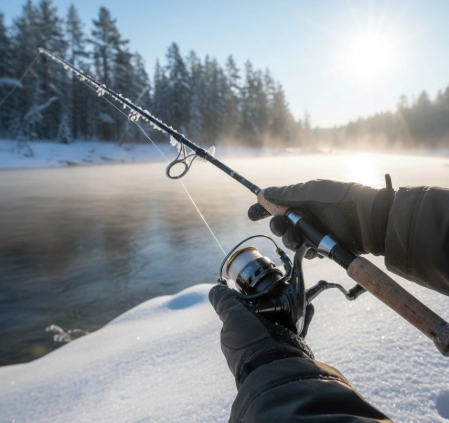
We at Master Fishing Guide have been in this situation more times than we’d like to admit — frozen fingers and rod guides freezing after every single cast. You clear the ice, make another cast or two, and everything locks up again. The line sticks, the drag feels dead, and of course, the only serious bite of the day happens exactly when your fishing rod is freezing up.
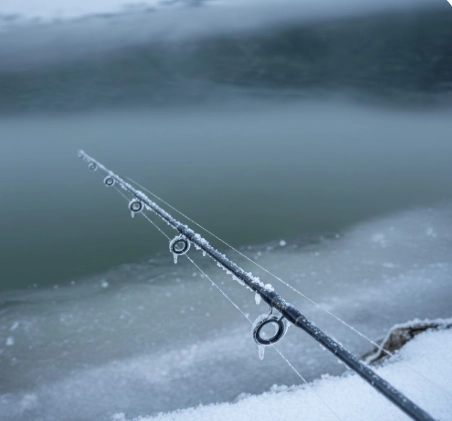
For us, rod guides freezing in winter isn’t a “small annoyance” — it’s a real gear-killer that can snap a rod tip or ruin an expensive line. The good news is that you don’t need miracle sprays. With a few field-tested tricks, you can stop ice buildup and keep your line moving freely even in sub-zero conditions. If you’re learning cold-water tactics, our winter pike fishing guide goes deep into locations, depths, gear and lure choices for the coldest months.
Rod Guides Freezing Every Cast? Do This and Clear the Ice Instantly
If your rod guides freezing after every cast is driving you insane, this is the fastest fix we use at Master Fishing Guide. Forget scraping ice with fingernails or hitting the rod on rocks — both damage the guides. The simplest and safest solution is to carry a small thermos with warm (not boiling) water and melt the ice in seconds.
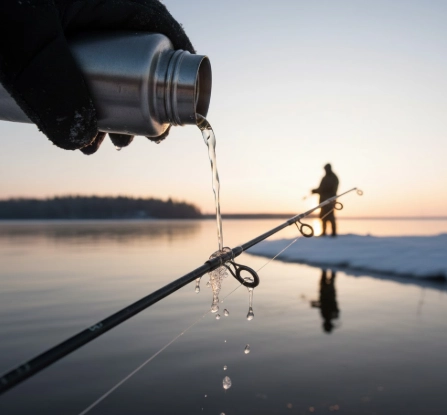
When you notice rod guides freezing and the tip ring locks up, just pour a bit of warm water over the top section of the rod. The ice falls off immediately, the line runs free again, and you’re back in the game without breaking anything. Make sure to wipe the guides dry after pouring water, or they will freeze even faster. Shake the rod gently, wipe with a glove, and keep fishing.
This trick works even in deep sub-zero temperatures because you are not “preventing” ice — you are resetting your guides to clean, ice-free condition whenever needed. Use it especially during the best strike windows instead of wasting time picking ice out of every guide.
If you want to understand why some days rod guides freezing happens faster than others, it’s directly connected to temperature stability and fish activity. Make sure to read our guide on water temperature vs pike activity — it will help you time those short winter bite windows when clearing ice every few minutes is actually worth it.
Rod Guides Freezing Too Fast? Coat Them Before You Even Start Casting
If your rod guides freezing again just a few casts after you clear them, you need to slow the ice down before it even forms. One of the simplest tricks we use at Master Fishing Guide is to add a very thin protective film on the guides and tip ring before we start fishing. You don’t need anything fancy — lip balm, petroleum jelly, neutral ski wax or a silicone-based line spray all do the job.
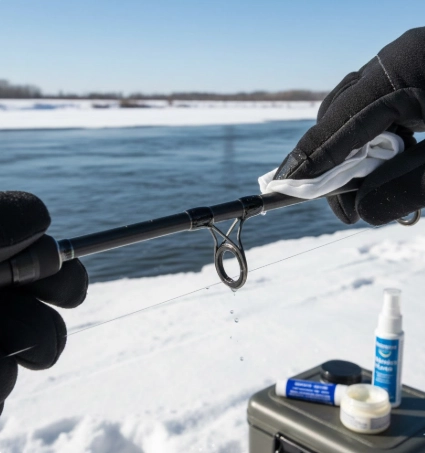
The goal is not to “waterproof” the rod, but to make the guides less friendly to ice. Put a very small amount on your fingers or a cloth and lightly wipe each guide and the tip ring. Don’t cake it on — too much product will just collect dirt and slow the line down. A thin, even film is enough to make water bead and slide off instead of sticking instantly and turning into solid ice.
This does not completely stop rod guides freezing, but it can easily double the time you can fish before you need to clear them again. On brutal days, we combine this coating trick with the warm-water method from Fix #1: coat the guides at the start, and then use warm water only when the build-up becomes really bad. That way you spend more time fishing, less time cleaning.
If you feel like your current setup still struggles in harsh cold even with coatings, it may also be a rod issue — some light, soft rods with tiny guides simply ice up faster. In that case, take a look at our in-depth guide to best pike fishing rods for winter and choose a blank that can handle heavy lures, thick leaders and real sub-zero abuse without turning every session into a constant battle with ice.
Stop Throwing Ice Into Your Own Rod Guides — Change Casting Angle and Line Control
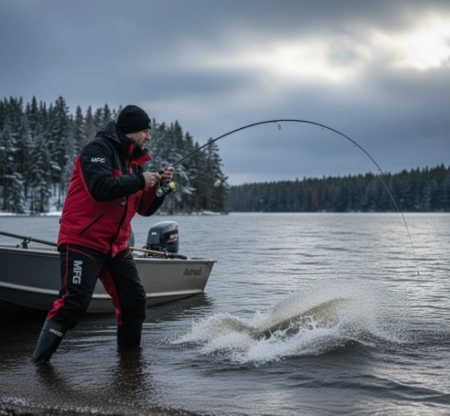
Most anglers don’t realize this: a huge part of rod guides freezing is caused by the angler, not the weather. When you make hard, high, overhead power casts with a soaked braid, you create a fine mist of water particles flying through sub-zero air. That mist lands directly on the tip section — instant ice. If you keep casting this way, rod guides freezing is guaranteed no matter what coating or spray you use.
The fix is simple — change the way you cast. Shorten your cast slightly and stop “whipping” the rod. Make smoother, more controlled casts, and keep the rod tip a bit lower on the retrieve so the line stays closer to the water instead of cutting the cold air. Every bit of reduced line spray means less ice on your guides and tip ring.
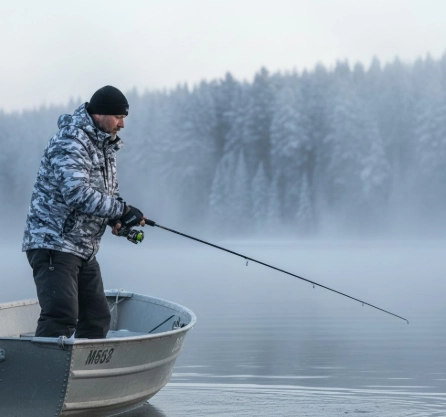
Another overlooked factor is line management. Slack line throws more droplets into the air than tight line. Try to keep light tension during the retrieve and avoid aggressive rod jerks unless necessary. A calm, steady retrieve dramatically slows down rod guides freezing because far less water is atomized into the air.
If your reel lays the line unevenly or throws loops, it will spray even more water with each cast. That’s why many winter anglers switch to sealed reels (and even MagSealed systems) that prevent water from entering the drag and gears, reducing internal icing and spray. To optimize your setup, check our guide to best reels for pike fishing in cold water — a smooth reel with proper line lay can noticeably reduce spray and keep your guides ice-free for longer.
Your Line Might Be the Real Problem — Choose Winter Line That Reduces Rod Guides Freezing
Many anglers blame only the weather, but in reality their line choice is a huge reason for rod guides freezing. Ultra-thin braids soak up water like a sponge, spray it into the air on every cast, and then all that moisture freezes instantly on the guides and tip. If you fish with the same braid you used in October, you are basically feeding ice to your rod.
The fix is straightforward — match your line to real winter conditions. Slightly thicker braid or coated braid absorbs less water and throws less fine mist when casting. In extreme cold, some anglers even switch to mono or fluorocarbon leaders because they absorb less water and transfer fewer droplets to the guides. The goal is simple: less water on the line = less rod guides freezing.
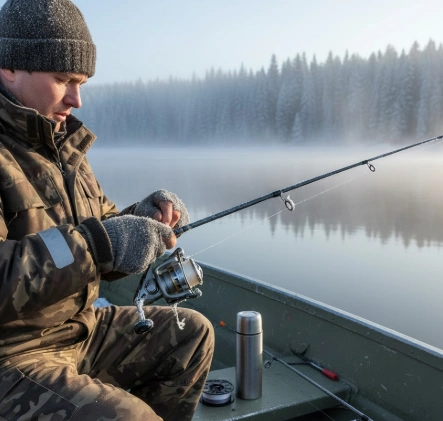
Don’t be afraid to go one size up in diameter. The casting distance difference is small, but the reduction in icing is huge. Thicker, stiffer lines don’t atomize water as much, which means your guides stay usable for much longer. Combined with smoother casting and tension control, this alone can dramatically reduce rod guides freezing during a session.
If you’re unsure what exact lines perform best in sub-zero temperatures, we’ve already tested them. Check our full breakdown of best winter pike fishing lines — including coated braids and cold-resistant mono options — and build a setup that won’t turn every trip into a constant fight against ice.
Don’t Fight the Worst Cold — Pick the Right Time and Keep Your Hands Warm
Sometimes the smartest way to beat rod guides freezing is not force, but timing. On the coldest, bluebird mornings your guides will ice up after every cast no matter what you do. Instead of burning energy fighting nature, plan your winter sessions around the warmest parts of the day and stable weather windows.
Fish when conditions are least hostile. Late morning to early afternoon, light overcast, or a slight temperature rise of just a few degrees can drastically slow down rod guides freezing. Avoid brutal wind whenever you can — wind accelerates evaporation, and evaporation creates more ice on your guides.
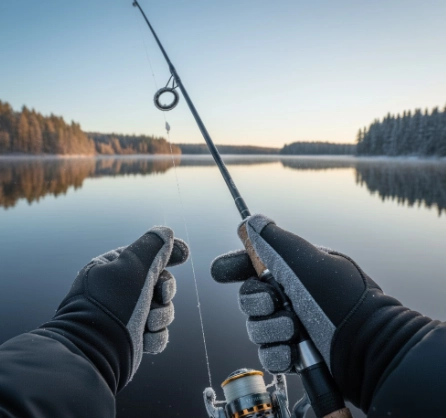
There’s another factor anglers underestimate — cold, numb hands make rod guides freezing much worse. When your fingers are frozen, you snap the rod harder, create more line spray, and struggle to clear ice cleanly. Warm, protected hands give you finer control, smoother casting and far less unnecessary water mist near the guides.
That’s why we strongly recommend using proper winter fishing gloves instead of regular street gloves. They keep dexterity while protecting your fingers from wind and ice. Take a look at our tested list of best winter fishing gloves — the right pair lets you fish longer, handle the reel properly and deal with rod guides freezing without your hands going numb in minutes.
Bottom line: choose the right window, avoid harsh wind, protect your hands, and you instantly reduce how often rod guides freezing stops your fishing. Sometimes “fish smarter, not colder” is the biggest winter advantage you can have.
How Air Temperature Changes Rod Guides Freezing Speed
| Air Temperature (°C / °F) | Freezing Speed | What You Will Notice | Best Action to Take |
|---|---|---|---|
| +2 to 0 °C / 35–32 °F | Slow icing | Light ice on tip after many casts | Light guide coating and avoid strong wind |
| 0 to -3 °C / 32–27 °F | Moderate icing | Tip ring freezes every few casts | Coat guides + smoother casting |
| -3 to -7 °C / 27–19 °F | Fast icing | Most guides freeze almost every cast | Carry warm water for instant de-icing |
| -7 to -12 °C / 19–10 °F | Very fast icing | Rod tip locks up constantly, drag stiffens | Use thicker/coated line + shorter casts |
| Below -12 °C / 10 °F | Extreme icing | Guides freeze instantly, line becomes brittle | Short sessions only, sealed reels, best time windows |
FAQ – Rod Guides Freezing in Winter
Do braided lines freeze faster than mono in winter?
Yes. Braided lines absorb more water and spray more tiny droplets into the air during casting. Those droplets freeze on your rod guides almost instantly. Mono and fluorocarbon absorb less water and usually cause slower rod guides freezing, although braid still has better sensitivity. In extreme cold, slightly thicker or coated braid performs best.
Is it safe to pour hot water on frozen rod guides?
No. Never use boiling water. Extreme temperature shock can damage the glue, crack ceramic inserts, or weaken epoxy on the wraps. Warm water is enough to melt ice quickly. After melting, always wipe the guides dry — otherwise they will freeze even faster on the next cast.
Why does the rod tip freeze faster than lower guides?
The tip section is the thinnest part of the rod and has the smallest metal mass, so it loses heat first. It is also the place where the line releases the most spray. Cold wind accelerates evaporation, which makes ice form on the tip ring much faster than on the rest of the rod.
Will silicone-based line spray really stop rod guides freezing?
It won’t stop it completely, but it helps a lot. A thin layer of silicone-based line spray or lip balm makes the guides less “sticky” to ice, so water beads and falls off instead of freezing instantly. On very cold days, combine spray or coating with warm-water de-icing for best results.
Can hitting the rod to break ice damage the guides?
Yes. Tapping the rod on rocks, the ground or the boat can crack the ceramic inserts or even damage the blank. Micro-cracks are often invisible but later cut your line during a fight with a fish. Always melt or gently remove ice instead of hitting frozen guides.
How cold is “too cold” to fish without constant rod guides freezing?
Every setup is different, but below about -7°C (19°F) icing usually becomes constant. Wind makes things worse because it increases evaporation. At these temperatures you should fish shorter sessions, use sealed reels, carry warm water, and pick the warmest time window of the day.
5 Critical Mistakes to Avoid When Rod Guides Freezing Happens
When you are cold and frustrated, it’s easy to make a split-second decision that ruins your expensive gear. At Master Fishing Guide, we have seen beautiful rods snapped and ceramic inserts ruined because of simple mistakes. If you want your setup to survive the winter, avoid these five common errors.
1. Banging the Rod Against the Boat or Rocks
This is the most common mistake. It might feel satisfying to watch the ice shatter, but striking your rod against a hard surface can cause micro-fractures in the blank or the ceramic guides. You won’t see the damage instantly, but the next time you hook a trophy pike, that rod will snap like a twig exactly where you hit it.
2. Scraping Ice with Metal Tools or Knives
Never use a knife, pliers, or any metal tool to scrape ice out of your rod guides. The ceramic rings (SiC or Alconite) inside your guides are incredibly smooth but can be easily scratched by metal. Once you create a tiny scratch, it will act like a saw and cut through your braided line every time you cast.
3. Using Boiling Water for De-icing
As we mentioned in our FAQ, boiling water is a gear killer. The extreme temperature jump from -5°C to 100°C causes thermal shock. This can expand the metal frames faster than the ceramic inserts, causing the inserts to pop out or crack. Stick to lukewarm or warm water from your thermos.
4. Forcing the Reel Handle When the Tip Is Frozen
If your rod guides freezing has locked the line at the tip, do not try to power through it by turning the reel handle. You are essentially putting 100% of the reel’s drag pressure on a tiny, frozen point at the tip. This is the fastest way to snap a rod tip. Always clear the ice before you apply any tension to the reel.
5. Using WD-40 or Harsh Chemicals on the Line
While some old-school anglers swear by WD-40, it is a solvent that can degrade certain types of fishing lines and even the epoxy on your rod over time. Always use 100% silicone-based sprays or neutral lubricants like lip balm. They are safer for your gear and won’t leave an oily, chemical slick on the water that could spook fish.
Final Thoughts – Winter Success Comes From Preparation, Not Luck
When rod guides freezing becomes your reality, it doesn’t mean you’re doing anything wrong — it simply means winter has real teeth. The anglers who consistently catch pike in sub-zero conditions aren’t tougher than everyone else, they’re just better prepared. Warm water, proper line choice, coated guides, sealed reels, and smart timing all work together. None of these fixes alone is “magic,” but combined they turn a miserable frozen session into controlled, effective winter fishing.
Another key point is mindset. Don’t fight the elements blindly. Instead of forcing casts through ice, slow down, think, and apply the right fix for the situation you’re in. Pay attention to temperature changes, wind, humidity and pressure — all of them influence how fast rod guides freezing will occur. For reliable weather and cold-exposure information, you can always check data from NOAA, which helps you plan your winter sessions with real numbers, not guesses.
Winter fishing rewards discipline. Protect your gear, protect your hands, avoid the critical mistakes we listed, and treat your equipment like precision tools rather than ice scrapers. Do that, and you’ll not only catch more fish — your rods and reels will still be working perfectly when the first warm spring day finally arrives.