

How to Fish Deadbait for Winter Pike (2025): Proven Baits & Rigs Explained Step-by-Step
When water temperatures drop into the true winter zone around 0–6°C (32–43°F), pike behavior changes completely. They stop chasing fast lures, their metabolism slows down, and feeding becomes short, strategic, and energy-efficient. This is the moment when deadbait stops being an “alternative” and becomes the most reliable cold-water method you can use.
A properly placed smelt, herring, sardine, or roach delivers exactly what winter pike want: a slow, natural, effortless meal. Instead of forcing a lethargic fish to sprint after a lure, you present a dying baitfish right inside its strike window. In freezing water, that difference decides everything.
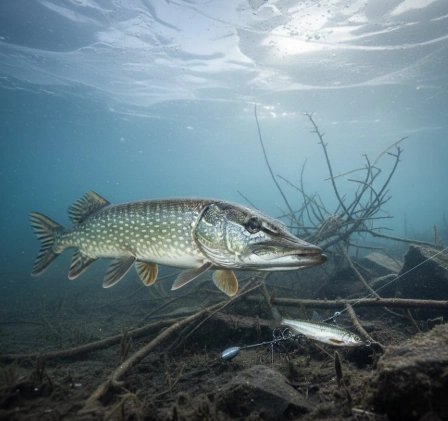
Deadbait fishing is not about sitting and hoping. It’s about understanding where pike actually position themselves in winter, how stable temperatures dictate depth, and which rigs keep your bait in the exact zone where a big fish is willing to strike. When you match the right bait with the right depth and the right presentation, deadbait becomes more predictable than any lure technique in winter.
This guide covers how to fish deadbait for winter pike the correct way—proven baits, the rigs that truly work, the exact depths you should target, and the conditions that trigger cold-water bites. No guesswork. No folklore. Only cold-tested tactics for catching heavy pike in freezing water.
When Deadbait Works Better Than Lures in Winter
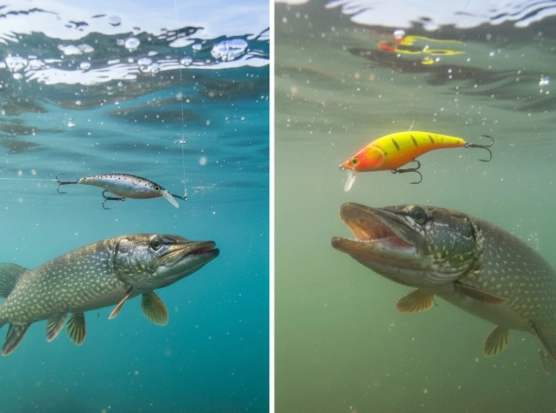
When winter water temperatures drop below 6°C (43°F), pike stop behaving like the aggressive predators you see in autumn. Their entire feeding strategy changes, and energy conservation becomes the number one rule. In this slow, cold-water state, pike rarely chase fast-moving lures, even when those lures have proven action in other seasons.
Winter deadbait dominates because it matches the natural behavior of both pike and baitfish during extreme cold. When everything in the water slows down, a fresh smelt, roach, sardine or herring presented close to the strike zone becomes a far easier meal than anything that needs to be chased. This is especially true when following the positioning principles described in the winter pike guide, where stability and depth control matter more than lure selection.

Long stable cold fronts (48–72 hours) are the number one moment when deadbait beats lures. Pike settle into predictable depth layers and wait for slow, easy prey. In deep lakes, they stick to the stable 4°C (39°F) thermal layer. In shallow lakes, they stay in the mid-depth zone and barely move. In both environments, a static or gently suspended deadbait is simply more realistic than any artificial presentation.
After a cold front passes and pressure rises sharply, pike become even more passive. This is the exact moment when ledger rigs and suspended deadbaits outperform every lure category — soft swimbaits, jerkbaits, spoons, even heavy-metal winter presentations. Clear winter water also strengthens the advantage of natural scent, letting pike locate the bait without wasting energy.
Whenever the water is brutally cold, calm, and stable — deadbait wins every single time. It stays in the strike zone longer, matches the metabolism of big winter pike, and delivers a high-calorie meal with almost no required movement. In true winter conditions, deadbait is simply the most predictable method you can use.
Best Deadbaits for Winter Pike (Smelt, Herring, Roach, Sardine)
Choosing the right bait makes the biggest difference in winter because pike rely heavily on scent and low-effort feeding. When the water drops near freezing, a natural oily baitfish becomes far more effective than any artificial lure. For many anglers this is the moment when a reliable winter pike reel becomes essential, because deadbait fishing demands slow, controlled movement and perfect sensitivity.
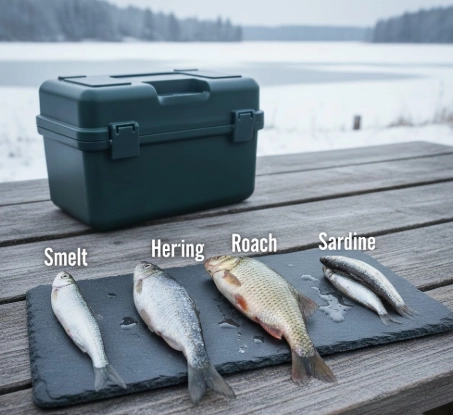
Why Smelt Works So Well in Near-Freezing Water
Smelt is the number one winter deadbait in many countries. It releases scent even in near-freezing water, has a slim profile, and looks like a dying baitfish with zero effort. Smelt works especially well in deep, clear lakes where pike track scent trails instead of movement.
Why Herring Produces the Strongest Winter Scent Trail
Herring is the most oily winter bait and produces a strong scent cloud. Because it is soft, it excels during short feeding windows and cold fronts. The natural oils spread slowly in deep water, making herring deadly in basins and slow rivers.
Why Roach Is the Most Natural European Winter Deadbait
Roach is the most natural bait for European waters. Pike feed on roach year-round, so a slightly frozen roach on a ledger rig is one of the most consistent cold-water options available. It stays firm, durable, and presents naturally in slow movement.
When Sardines Outperform Other Baits
Sardines leak scent quickly and work best when pike rise to mid-depth zones after stable sunlight warms the upper layers by only 1–2°C. Their soft flesh creates a fast, attractive scent trail that triggers opportunistic strikes.
Ideal Size and Presentation of Winter Deadbaits
The ideal winter deadbait size is 10–15 cm (4–6 inches). Smaller baits match the slow metabolism of cold-water pike and are easier to inhale without chasing. Larger baits still work, but they’re better on mild winter days or late-season pre-spawn movement.
Why Freshness and Scent Release Matter Most
The key is freshness, scent release, and natural positioning. A clean, properly thawed bait sitting still in the strike zone will consistently outperform fast lures during true winter conditions.
Best Rigs for Winter Pike Deadbait Fishing (Float, Ledger, Paternoster, Drifting)
Winter deadbait fishing works only when your rig keeps the bait exactly inside the strike zone. Pike will not chase; they hit only when the bait is placed at the right depth with minimal movement. That’s why choosing the correct rig matters as much as choosing the bait. When the water is near freezing, pairing a sensitive winter rod with the right setup becomes essential for detecting subtle pickups and fighting heavy fish slowly.

Every rig here is designed to keep the deadbait steady, visible and easy to inhale. In cold water, slow and stable always outfishes fast and aggressive.
1. Float Rig (Perfect for Shallow to Mid-Depth Lakes)
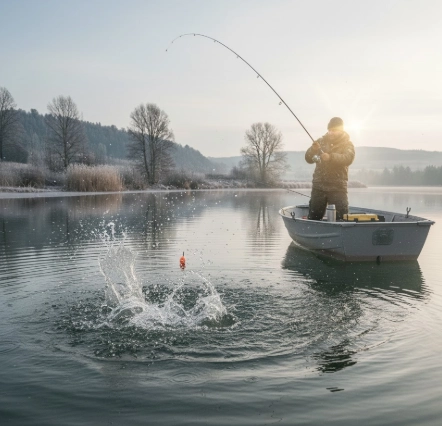
This is the easiest and most beginner-friendly winter deadbait setup. A sliding float lets you present your bait at a precise depth, especially when pike rise during stable sunny conditions. Use this rig when fishing 2–6 m (6–20 ft) because it keeps the bait naturally suspended above the bottom where winter pike often hover.
Why it works: In clear cold water, a suspended bait looks like an easy dying prey. Pike up-close will inhale it without hesitation.
2. Ledger Rig (Best for Deep Lakes and Cold Fronts)
The ledger rig pins your deadbait right on or just above the bottom, which is perfect for the most stable winter temperature layer. Use this rig when pike sit near 8–14 m (26–46 ft) or when pressure rises after a cold front. A heavy lead keeps your bait fixed in place, and the scent spreads slowly across the bottom.
Why it works: Winter pike often sit tight to the bottom during high pressure — a still bottom bait becomes the easiest possible meal.
3. Paternoster Rig (Great for Rivers and Canals)
This rig keeps your bait slightly lifted above the bottom while the weight anchors everything down. It’s the best choice for rivers, slow canals and back-eddies because it prevents the bait from rolling in the flow. The paternoster keeps your deadbait in the “energy-saving pockets” where winter pike actually live.
Why it works: The bait stays off the bottom, fully visible and stable — exactly what a cold, slow-moving pike prefers.
4. Drifting Deadbait Rig (When Pike Sit Mid-Water)
On stable sunny days, pike often rise into mid-depth layers. A gentle drifting rig with a light float or small sail float makes the bait move extremely slowly — just enough to mimic a dying fish. This rig destroys in shallow lakes, canals and wide bays where baitfish suspend in the middle of the water column.
Why it works: Natural micro-movement without speed or vibration triggers lethargic pike that ignore everything else.
The rule is simple: match the rig to the depth and stability of the water. Winter pike won’t chase — but they will always eat an easy bait that sits inside their strike window.
Float Rig for Winter Pike Deadbait (Beginner-Friendly Step-by-Step Guide)
The float rig is the easiest and most natural way to fish deadbait in winter, especially when pike rise into mid-depth layers during stable weather. This rig keeps your bait perfectly suspended above the bottom where cold-water pike slowly cruise for an easy meal. For beginners, it’s the best starting point because it’s simple, effective, and works in lakes, canals, and slow bays.
When you combine this setup with a sensitive winter rod, you can detect subtle pickups and strike with full control without spooking the fish.
What You Need for the Float Rig
To build this rig, prepare the following pieces of gear:
- Sliding float (15–25 g capacity)
- Stopper bead or silicone float stop
- Small swivel or rolling connector
- Lead weight (5–20 g depending on depth)
- Wire trace with two treble hooks (size 4–6)
- Mainline (braid or mono)
- Deadbait (smelt, roach, sardine)
Everything about the float rig is designed to keep the bait stable but visible. In clear winter water, a suspended baitfish is the closest thing to a real dying prey.
How to Build the Float Rig (Step-by-Step)
Follow these simple steps to assemble the rig from scratch:
- Slide a float stop onto your mainline.
- Add a bead to protect the float.
- Slide on a sliding float (bottom tube type).
- Add another bead under the float.
- Thread on your lead weight (5–20 g).
- Tie your mainline to a swivel or rolling connector.
- Attach your wire trace with the two trebles to the swivel.
- Mount your deadbait by hooking one treble near the tail and one near the head.
The float stop controls your depth — slide it up or down to position the bait exactly above where pike hold. In 2–6 m (6–20 ft) winter water, even a small depth adjustment can trigger a strike.
How the Rig Works in the Water
The float keeps your bait suspended and stable. The weight sits below it, anchoring everything but still allowing the bait to move slightly in micro-currents. This tiny natural movement is enough to signal an easy meal to lethargic winter pike.
The golden rule: Keep the bait 30–60 cm (12–24 inches) above the bottom in winter. Too high and pike ignore it. Too low and it blends into the mud.
This rig shines on calm winter days when pike slide into mid-depth layers searching for suspended prey.
Ledger Rig for Deep Winter Pike (Bottom-Presentation Deadbait Setup)
The ledger rig is the most reliable winter setup when pike drop deep and lock onto the stable 4°C (39°F) layer near the bottom. This rig keeps your deadbait still, natural, and easy to inhale — exactly what lethargic winter pike want during cold fronts or high-pressure periods. It is perfect for deep lakes, slow rivers, and any water where pike hug the bottom to save energy.
Because winter pickups are extremely subtle, the ledger rig allows pike to take the bait without feeling resistance. This dramatically increases your chances of hooking fish that barely move in cold water.
What You Need for the Ledger Rig
- Running lead weight (20–50 g depending on depth)
- Run ring or weight clip
- Bead to protect the knot
- Swivel (size 6–8)
- Wire trace with treble (size 4–6)
- Mainline (braid or mono)
- Deadbait (smelt, herring, roach)
This setup excels when pike are glued to the bottom and won’t rise for suspended bait.
How to Build the Ledger Rig (Step-by-Step)
- Thread a run ring or weight clip onto your mainline.
- Add a bead to protect the knot.
- Tie your mainline to a swivel.
- Attach your wire trace with hook to the swivel.
- Clip the running lead (20–50 g) onto the run ring.
- Mount your deadbait horizontally so it lies naturally on the bottom.
The running lead lets pike pick up the bait without feeling resistance. This is crucial in winter when strikes are soft, slow, or even completely slack at first.
How the Rig Works in the Water
The lead anchors your rig to the bottom while the trace and deadbait sit naturally just above the substrate. The scent spreads slowly through the deep layer, especially on cold, still days. Pike typically inhale the bait without moving far — you’ll see either a slow pull or a complete drop-back on the line.
Use this rig when fishing 8–14 m (26–46 ft) in deep lakes or when air pressure spikes after a cold front. During these periods, pike push down into the most stable thermal pocket, making bottom rigs unbeatable.
The ledger rig is the most consistent winter option for deep and cold conditions. When nothing else works, this is the setup that produces big fish.
Paternoster Rig for Winter Pike (Best Setup for Rivers & Canals)
The paternoster rig is the ultimate winter setup for rivers, canals, and any water with light flow. It keeps your deadbait lifted just above the bottom while anchoring everything in place with a fixed weight. This makes it deadly in slow back-eddies, bends, and slack-water pockets where winter pike sit to save energy.
The key advantage is simple: the bait stays perfectly visible and stable, while the weight prevents it from rolling in the flow.
What You Need for the Paternoster Rig
- Inline or clipped lead (20–40 g)
- Short dropper line (10–20 cm / 4–8 inches)
- Main swivel
- Wire trace with two trebles (size 4–6)
- Mainline (braid or mono)
- Deadbait (roach, smelt, sardine)
This rig keeps the deadbait off the bottom where pike see it instantly — no mud, no debris, no rolling.
How to Build the Paternoster Rig (Step-by-Step)
- Tie a main swivel to your mainline.
- Prepare a short dropper line (10–20 cm) with a lead weight at the end.
- Attach the dropper line to the bottom eye of the swivel.
- Clip or tie your weight securely to the dropper.
- Attach your wire trace with two trebles to the top eye of the swivel.
- Hook your deadbait so it hangs naturally just above the weight.
The dropper line controls exactly how high the bait sits above the bottom. Shorter dropper = tighter to the bottom. Longer dropper = more visibility in clearer water.
How the Rig Works in the Water
The weight stays firmly on the bottom while the deadbait hangs just above it, right inside the slack-water pockets where pike conserve energy. This is one of the most efficient rigs for moving water because it presents the bait exactly where winter pike sit.
Use this rig in rivers, canals, marinas, and back-eddies when cold fronts push pike into sheltered areas.
The paternoster rig gives you perfect control in moving water. When nothing else keeps the bait steady, this setup produces fish consistently.
Drifting Deadbait Rig for Winter Pike (Natural Slow-Movement Presentation)
The drifting deadbait rig is designed for days when winter pike lift off the bottom and hold in the mid-depth layers. This rig uses a light float or drift sail to move the deadbait extremely slowly across the water — just enough to mimic a dying fish. It works best in lakes, canals, and wide bays with minimal current, especially when baitfish suspend between 1.5–4 m.
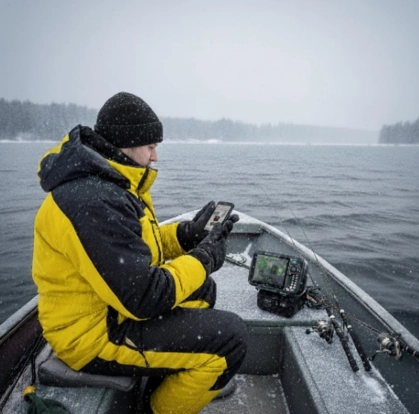
To position the bait at the correct depth and understand where the suspended pike actually sit, anglers often rely on fish finders that reveal mid-water bait clouds and soft winter marks.
What You Need for the Drifting Rig
- Light sliding float or sail float (5–15 g)
- Float stop + bead
- Small inline weight (5–10 g)
- Swivel connector
- Wire trace with two trebles (size 4–6)
- Mainline (braid or mono)
- Deadbait (smelt, sardine, small roach)
This setup creates the natural “weak fish” movement that triggers cold-water pike even when nothing else works.
How to Build the Drifting Rig (Step-by-Step)
- Slide a float stop onto the mainline.
- Add a bead under the stop.
- Slide on your drifting float or mini sail float.
- Thread a small inline weight below the float.
- Tie the mainline to a swivel.
- Attach your wire trace with two trebles.
- Hook your deadbait lightly so it stays streamlined for slow drift.
The float stop controls depth, allowing you to keep your deadbait exactly in the mid-depth band where winter pike are most active during stable weather.
How the Rig Works in the Water
The wind or slight surface movement pushes the float slowly, while your deadbait follows underneath with minimal drag. This creates a subtle, dying-fish glide that cold pike cannot resist. The rig is deadly when pike suspend above deeper water or when they track scent trails horizontally instead of vertically.
Use this rig during stable sunny periods, light winds, or when baitfish marks appear mid-water on sonar. On these days, drifting beats bottom rigs easily.
The drifting deadbait rig unlocks suspended winter pike that ignore bottom and static presentations.
Free-Running Deadbait Rig for Winter Pike (Simple Beginner Setup)
The free-running rig is the easiest deadbait setup for beginners because it requires almost no components and works in most winter situations. This rig allows the pike to take the bait without feeling any resistance, which is crucial in cold water where strikes are slow and subtle.
This setup shines in still or lightly moving water where pike stay close to the bottom or just slightly above it during cold fronts.
What You Need for the Free-Running Rig
- Running lead weight (10–30 g)
- Run ring or simple sliding clip
- Small bead to protect the knot
- Swivel (size 6–8)
- Wire trace with two trebles (size 4–6)
- Mainline (braid or mono)
- Deadbait (smelt, roach, herring)
This rig is the most “plug-and-play” deadbait setup a beginner can use in winter.
How to Build the Free-Running Rig (Step-by-Step)
- Thread a run ring or sliding clip onto your mainline.
- Add a bead below the run ring to protect your knot.
- Tie the mainline directly to a swivel.
- Attach your wire trace with two trebles to the swivel.
- Clip the running weight onto the run ring.
- Mount your deadbait so it sits naturally near the bottom.
This rig lets pike pick up the bait and move without feeling tension. In freezing water, that can be the difference between a pickup and a rejection.
How the Rig Works in the Water
The sliding weight sits on the bottom and allows the mainline to move freely through the run ring. When a pike picks up the deadbait, your float or bite indicator will show a slow pull or complete slack drop-back. This natural resistance-free presentation is perfect for lethargic winter pike that avoid rigid or heavy rigs.
Use this rig in ponds, calm lakes, canals and any water where pike feed slowly close to the bottom.
The free-running setup is the simplest and most beginner-friendly deadbait rig for winter. It’s reliable, effective and takes only a minute to assemble.
Winter Pike Deadbait Depth, Rig & Location Guide
| Water Temperature (°C / °F) | Pike Behavior | Best Deadbait Depth | Best Rig Type | Best Location (Lakes / Rivers / Canals) |
|---|---|---|---|---|
| 0–2°C / 32–35°F | Extremely sluggish – minimal movement | 12–18 m (40–59 ft) | Ledger Rig | Deep natural lakes, deep basins, slow river holes |
| 3–4°C / 37–39°F | Holding tight to stable layer | 10–14 m (33–46 ft) | Ledger or Free-Running Rig | Deep lakes, sheltered bays, slow winter rivers |
| 5–6°C / 41–43°F | Short feeding windows | 6–10 m (20–33 ft) | Ledger / Paternoster | Mid-depth lake edges, river bends, canals with slight flow |
| 7–9°C / 44–48°F | More active; rise for suspended bait | 2–6 m (6–20 ft) | Float Rig / Drifting Rig | Shallow lakes, canals, marinas, backwaters, sunny bays |
Winter Deadbait Pike Fishing FAQ
How deep should you fish deadbait in winter?
In deep lakes, the best depth is usually 10–18 m (33–59 ft) near the stable 4°C (39°F) layer. In shallow lakes, 2–6 m (6–20 ft) is the strike zone.
What is the best deadbait for winter pike?
Smelt, herring, roach, and sardines all work, but smelt and herring release the strongest scent in freezing water, making them the top choices.
Should I use braid or mono for deadbait fishing?
Braid gives sensitivity in cold water, but many anglers use mono or fluorocarbon in shallow lakes to avoid freeze-ups and gain natural presentation.
Which rig works best for beginners?
The easiest rig is the float rig, because it keeps the bait suspended and is extremely simple to adjust for winter depth zones.
Do winter pike prefer moving or static bait?
During true cold fronts, pike prefer completely static bait. On stable sunny days, a drifting deadbait with micro-movement works better.
How long should I wait before striking?
In winter, strikes are slow. Most anglers wait 3–10 seconds to allow the pike to fully turn the bait before setting the hook.
Conclusion: The Real Key to Winter Pike Deadbait Success
Winter pike fishing with deadbait is brutally simple: place the right bait at the right depth and let the fish come to you. When water temperatures drop near freezing, pike stop wasting energy — they strike only when something easy enters their zone. That’s why presentation, depth precision, and rig selection matter far more than casting distance or lure action.
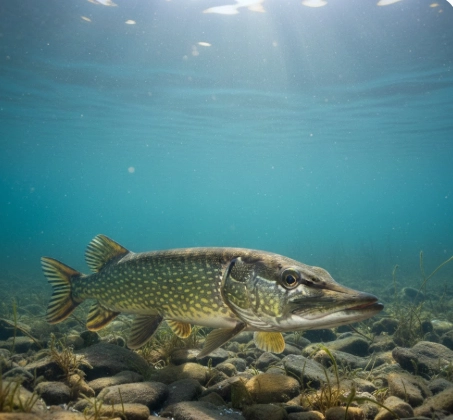
Whether you’re fishing a deep lake, shallow bay, river pocket, or slow canal, the formula is always the same: fresh oily bait, a stable rig, and perfect depth control. That’s the entire winter game.
And if you want to check depth contours, drop-offs, basins, and structure before your next session, use the official marine map viewer from Garmin Marine. It’s one of the strongest tools for finding winter holding areas.
If your bait is in the right depth layer, winter pike will find it — every time.